

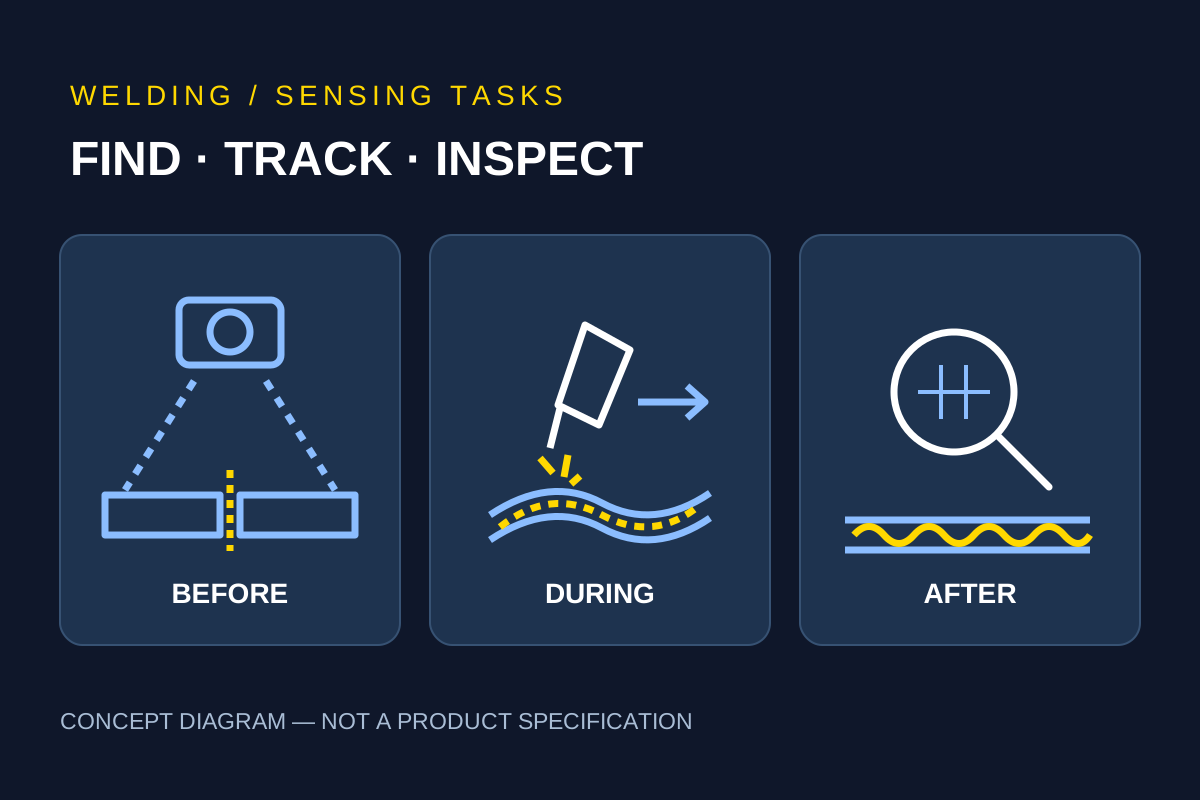
Concept diagram: locating a joint before welding, tracking during welding and inspecting afterwards are different tasks. Not a product specification or proof of sensing performance.
Define the sensing task first
Evaluate welding vision and seam tracking by asking what the proposed system detects, when it detects it and what correction it can make. An AI label does not establish compatibility with a robot or prove that a system can compensate for every joint variation.
Separate finding a joint before welding from tracking it during welding and inspecting the completed weld. Ask which of these tasks the proposal actually includes. Evidence for one task should not be presented as evidence for the others.
Describe the variation
- Joint geometry and the surfaces the sensor must observe.
- Part placement, fit-up and expected variation.
- Torch, fixture and cable arrangements around the joint.
- Surface finish and changing conditions during the process.
- Required detection result and permitted correction scope.
Use representative production parts rather than only an ideal sample. Ask the supplier to define detectable conditions, operating limits and the situations that require operator review. Treat the sensor as part of an integrated application, not as a replacement for workholding or process qualification.
What should a vision-guided welding proposal specify?
Request a record connecting each expected joint variation to the measurement the proposed equipment produces. Keep lateral position and height variation separate, and identify the result used to correct the path.
| Requirement to describe | Evidence to request |
|---|---|
| Lateral position and height variation | Which direction each measurement covers, what remains unmeasured and representative sample results for each. |
| Sensing method and output | The sensor and software, the reported measurement and whether the proposed correction happens before or during welding. |
Yaskawa's MotoSight 2D welding example treats lateral and height detection separately. Fronius also describes a wire-based sensing method. These examples explain why the actual measurement method matters; they do not establish availability or compatibility for a CBOXTEC configuration. Yaskawa Motoman; Fronius, accessed 20 October 2026.
Include the required measurement and correction outputs in your equipment-interface review.
Verify interfaces and limitations
Request the sensor model, software scope, controller interface and integration responsibilities. Clarify whether the proposal changes only path location or also any welding settings, and ask how those changes are bounded and checked.
Agree how missed detection, uncertain results and data recording will be evaluated. A tracking demonstration does not prove weld acceptance; inspection still needs its own criteria and evidence.
Plan an acceptance trial
Define a sample set covering expected variation and record both successful and unsuccessful results. Ask CBOXTEC whether a specific option is available for the proposed configuration, and request written scope and application evidence before including it in a production budget.
Prepare a project-specific comparison
The following questions are CBOXTEC procurement guidance. Confirm the proposed scope and acceptance criteria with your supplier.
- State whether the required output is joint location before welding, path correction during welding, or inspection after welding. Ask for separate evidence for each task included in the proposal.
- Give the supplier representative examples of joint position, fit-up and surface variation. Request records of missed or uncertain detection and the response required from the operator, not just successful demonstrations.
- For inspection requirements, agree which defects or measurements must be evaluated and how results will be checked against your acceptance criteria. A path-tracking demonstration alone does not answer this inspection question.