

Request an itemized quotation. Confirm the robot, welding equipment, fixtures, accessories and services separately. Do not assume the website price includes a complete installed system.
CBOXTEC welding automation application case
Robot arms and configuration options
Explore CBOXTEC welding robot arms and cart configurations. Share your workpieces, production requirements and destination to discuss a project-specific proposal.
Explore CTC-HJ SeriesPlanning a Project in Indonesia or Malaysia?
Prepare your factory brief or discuss your role as a distributor or system integrator.
Product Line
CBOXTEC Welding Robots — Full Product Line
Compare CBOXTEC robot arms and cart configurations against your workpiece, production and purchasing requirements. Confirm the proposed configuration and delivery scope in a written quotation.
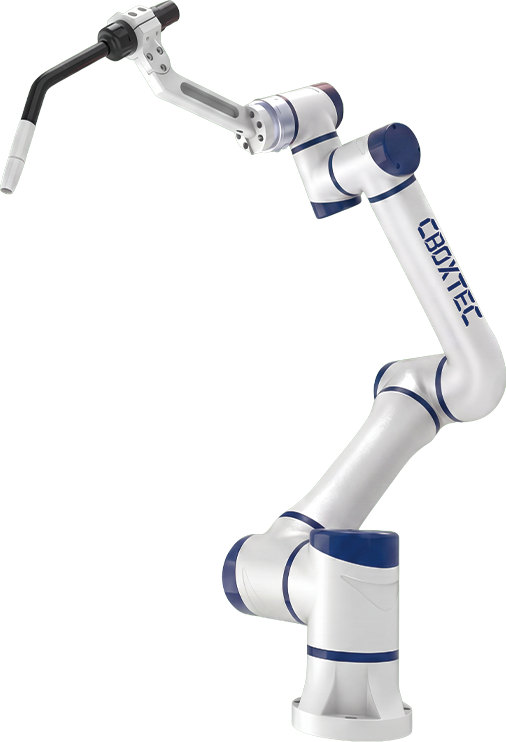
Model specifications for initial comparison
View Technical Specifications →
CTC007-HJ1077
These are the model values currently listed in the product catalog, not independently verified test results. Confirm the current datasheet and configuration before ordering. Payload refers to the load carried by the arm, not the weight of a stationary workpiece. Repeatability does not establish weld quality or complete-system accuracy.
→
Material grade, thickness, joint geometry, weld access and part variation.
→
Torch and tooling loads, working envelope, fixtures and loading arrangements; arm reach alone does not establish workpiece coverage.
→
Process, power source, interfaces, consumables and any tracking options for the exact configuration.
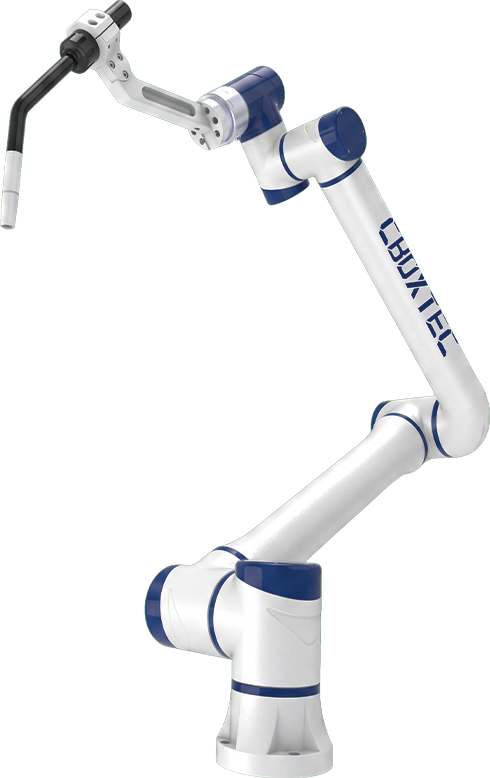
Model specifications for initial comparison
View Technical Specifications →
CTC006-HJ1460
These are the model values currently listed in the product catalog, not independently verified test results. Confirm the current datasheet and configuration before ordering. Payload refers to the load carried by the arm, not the weight of a stationary workpiece. Repeatability does not establish weld quality or complete-system accuracy.
→
Material grade, thickness, joint geometry, weld access and part variation.
→
Torch and tooling loads, working envelope, fixtures and loading arrangements; arm reach alone does not establish workpiece coverage.
→
Process, power source, interfaces, consumables and any tracking options for the exact configuration.
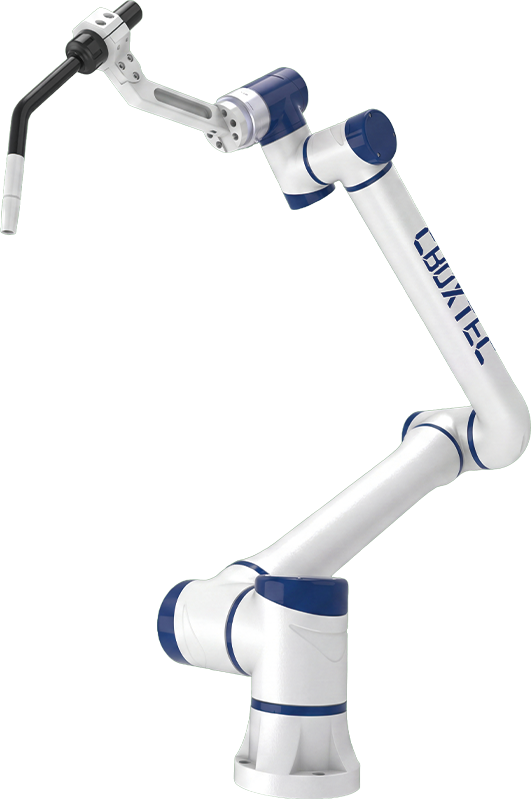
Model specifications for initial comparison
View Technical Specifications →
CTC015-HJ1464
These are the model values currently listed in the product catalog, not independently verified test results. Confirm the current datasheet and configuration before ordering. Payload refers to the load carried by the arm, not the weight of a stationary workpiece. Repeatability does not establish weld quality or complete-system accuracy.
→
Material grade, thickness, joint geometry, weld access and part variation.
→
Torch and tooling loads, working envelope, fixtures and loading arrangements; arm reach alone does not establish workpiece coverage.
→
Process, power source, interfaces, consumables and any tracking options for the exact configuration.
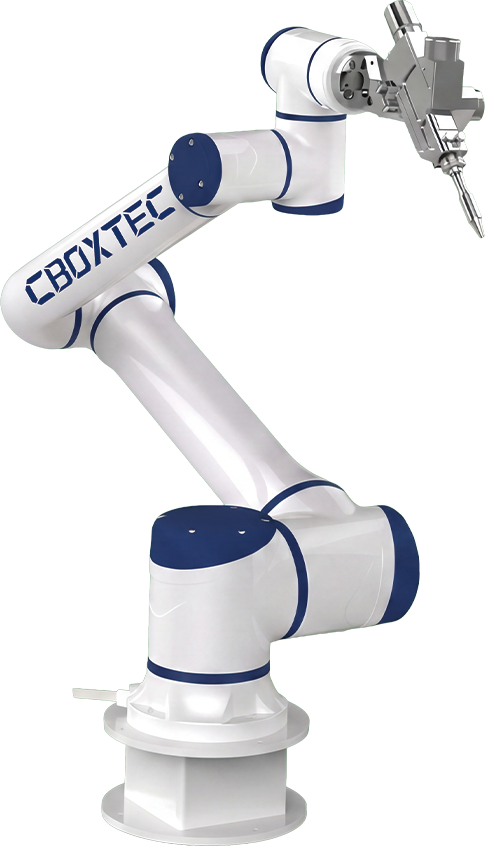
Model specifications for initial comparison
View Technical Specifications →
CTC015-HJ1464L
These are the model values currently listed in the product catalog, not independently verified test results. Confirm the current datasheet and configuration before ordering. Payload refers to the load carried by the arm, not the weight of a stationary workpiece. Repeatability does not establish weld quality or complete-system accuracy.
→
Material grade, thickness, joint geometry, weld access and part variation.
→
Torch and tooling loads, working envelope, fixtures and loading arrangements; arm reach alone does not establish workpiece coverage.
→
Process, power source, interfaces, consumables and any tracking options for the exact configuration.
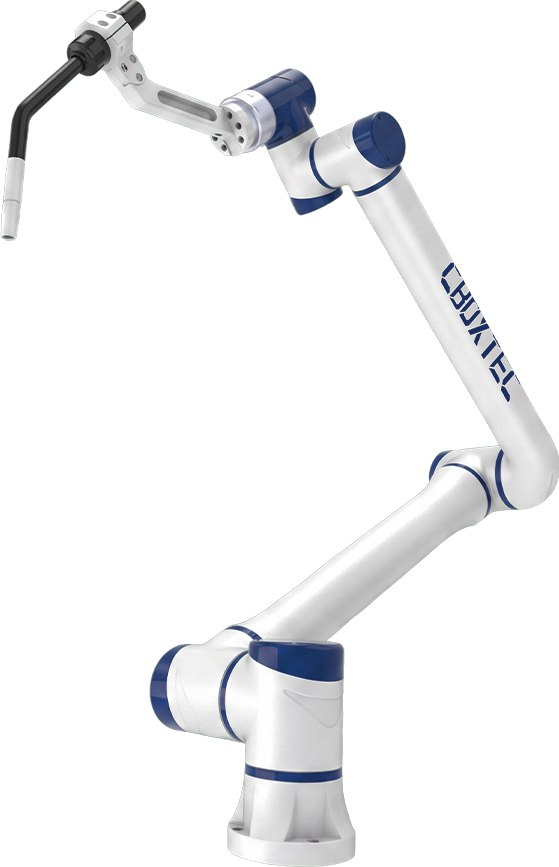
Model specifications for initial comparison
View Technical Specifications →
CTC020-HJ2027
These are the model values currently listed in the product catalog, not independently verified test results. Confirm the current datasheet and configuration before ordering. Payload refers to the load carried by the arm, not the weight of a stationary workpiece. Repeatability does not establish weld quality or complete-system accuracy.
→
Material grade, thickness, joint geometry, weld access and part variation.
→
Torch and tooling loads, working envelope, fixtures and loading arrangements; arm reach alone does not establish workpiece coverage.
→
Process, power source, interfaces, consumables and any tracking options for the exact configuration.
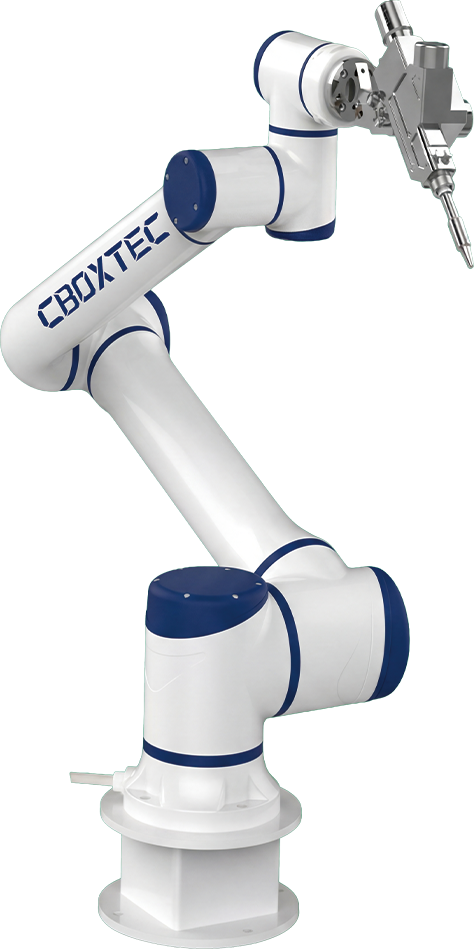
Model specifications for initial comparison
View Technical Specifications →
CTC020-HJ2027L
These are the model values currently listed in the product catalog, not independently verified test results. Confirm the current datasheet and configuration before ordering. Payload refers to the load carried by the arm, not the weight of a stationary workpiece. Repeatability does not establish weld quality or complete-system accuracy.
→
Material grade, thickness, joint geometry, weld access and part variation.
→
Torch and tooling loads, working envelope, fixtures and loading arrangements; arm reach alone does not establish workpiece coverage.
→
Process, power source, interfaces, consumables and any tracking options for the exact configuration.
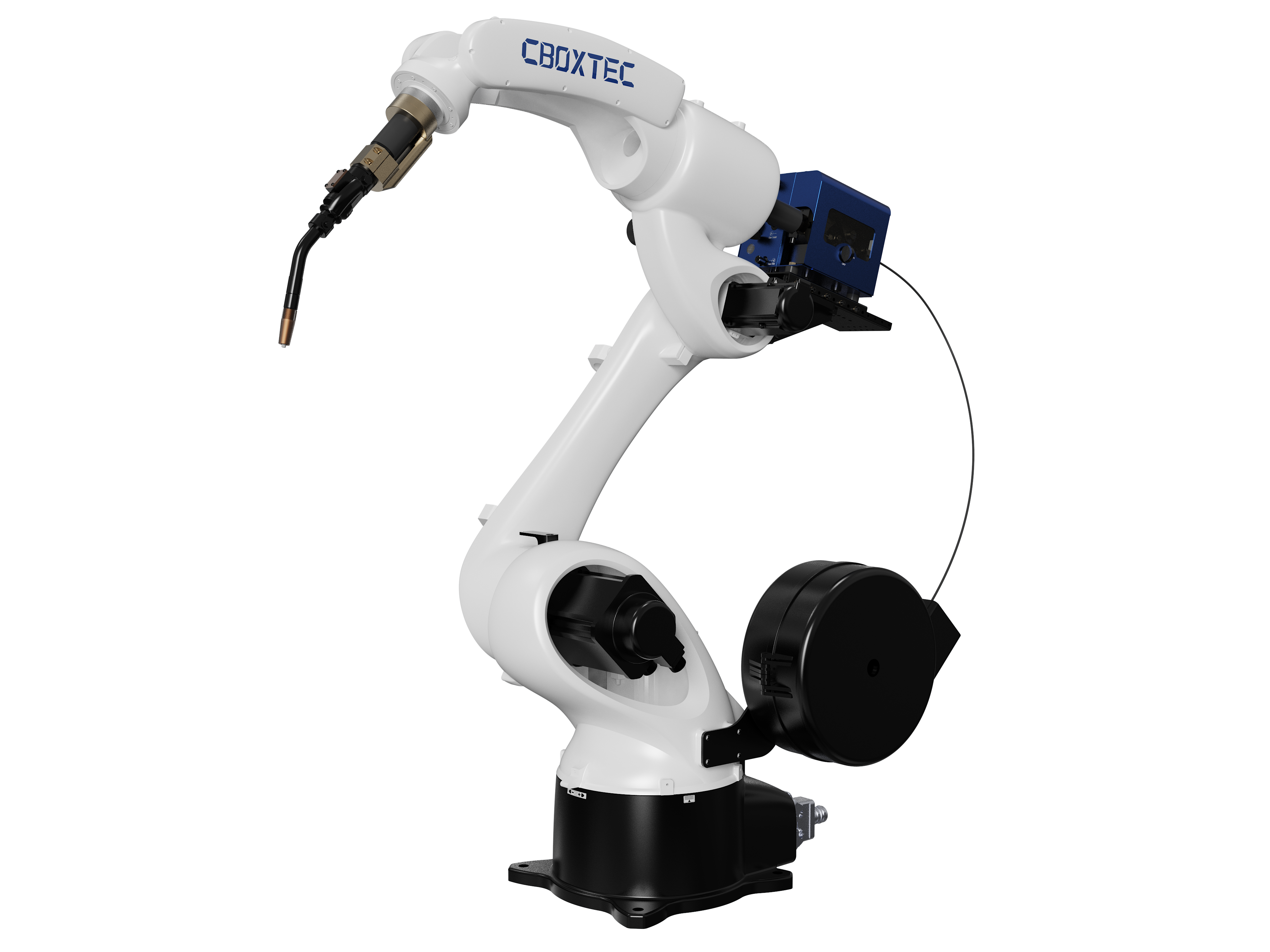
Model specifications for initial comparison
View Technical Specifications →
CTR008-HJ1450
These are the model values currently listed in the product catalog, not independently verified test results. Confirm the current datasheet and configuration before ordering. Payload refers to the load carried by the arm, not the weight of a stationary workpiece. Repeatability does not establish weld quality or complete-system accuracy.
→
Material grade, thickness, joint geometry, weld access and part variation.
→
Torch and tooling loads, working envelope, fixtures and loading arrangements; arm reach alone does not establish workpiece coverage.
→
Process, power source, interfaces, consumables and any tracking options for the exact configuration.
Processes
What to confirm before selecting a system
Process, power source, interfaces, consumables and any tracking options for the exact configuration.
GMAW (MIG/MAG)
Process, power source, interfaces, consumables and any tracking options for the exact configuration.
Request a Quote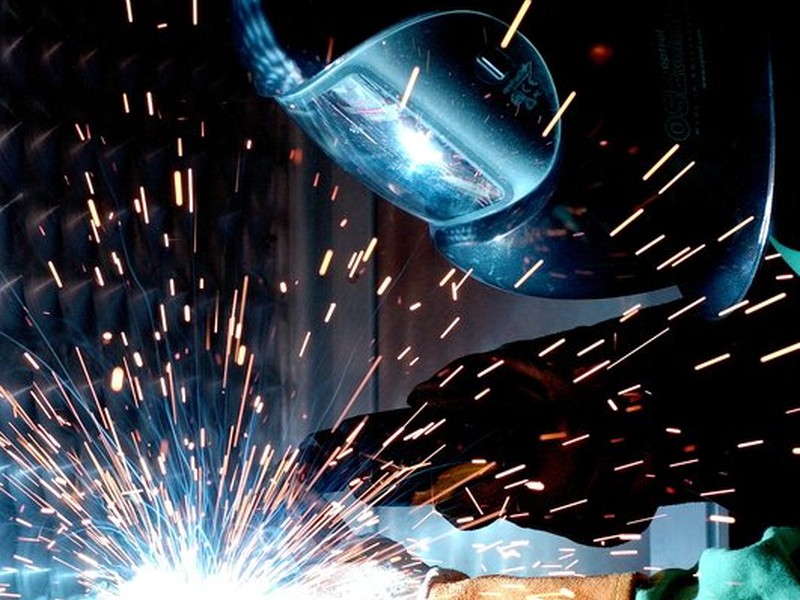
GTAW (TIG)
Process, power source, interfaces, consumables and any tracking options for the exact configuration.
Request a Quote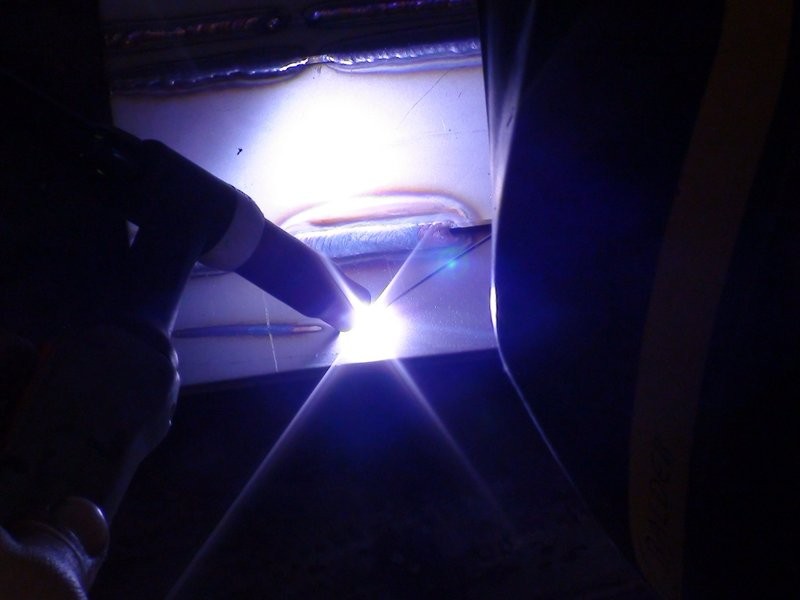
Spot Welding
Process, power source, interfaces, consumables and any tracking options for the exact configuration.
Request a Quote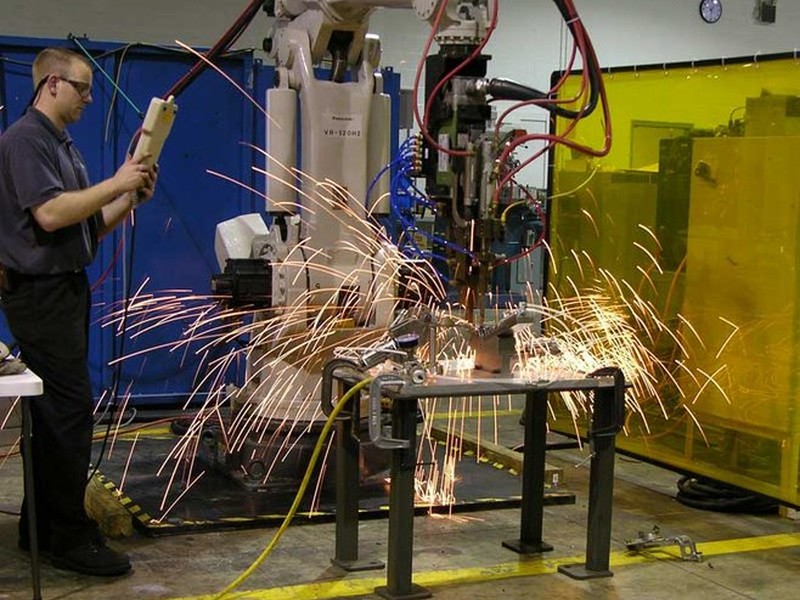
Laser Welding
Process, power source, interfaces, consumables and any tracking options for the exact configuration.
Request a Quote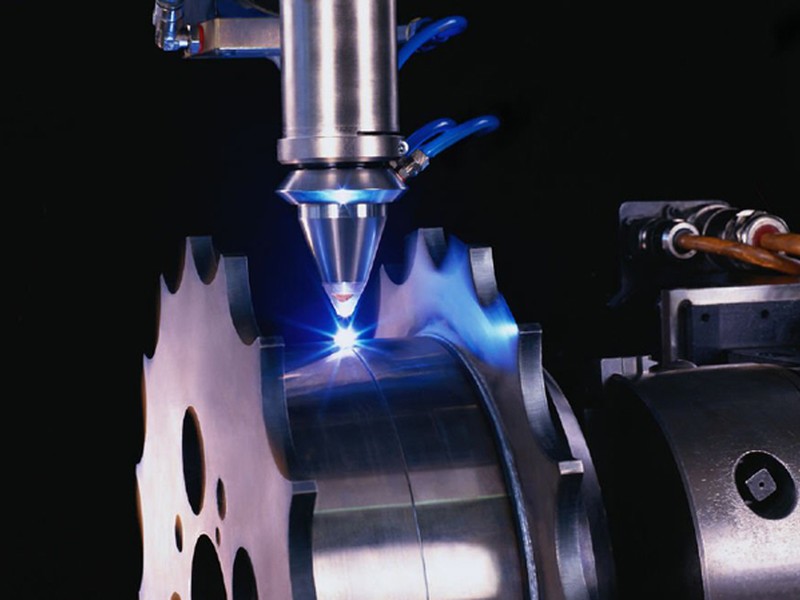
Industries
Application screening
These workpiece examples are starting points for feasibility discussions, not a record of customer installations or a guarantee of suitability.
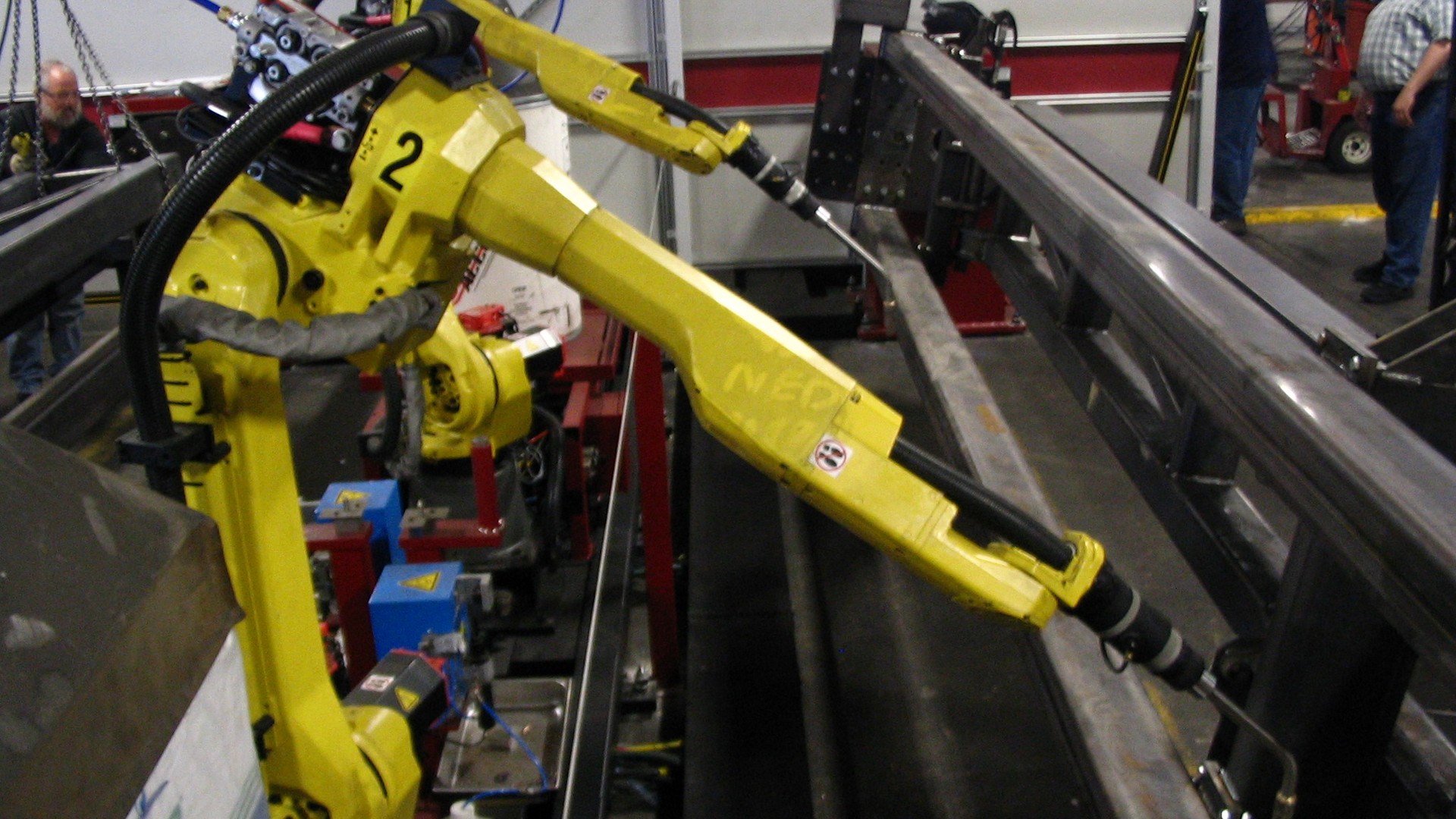
Automotive Parts & Components
01Exhaust systems, chassis brackets, seat frames, suspension components
Material grade, thickness, joint geometry, weld access and part variation.
Explore Solution →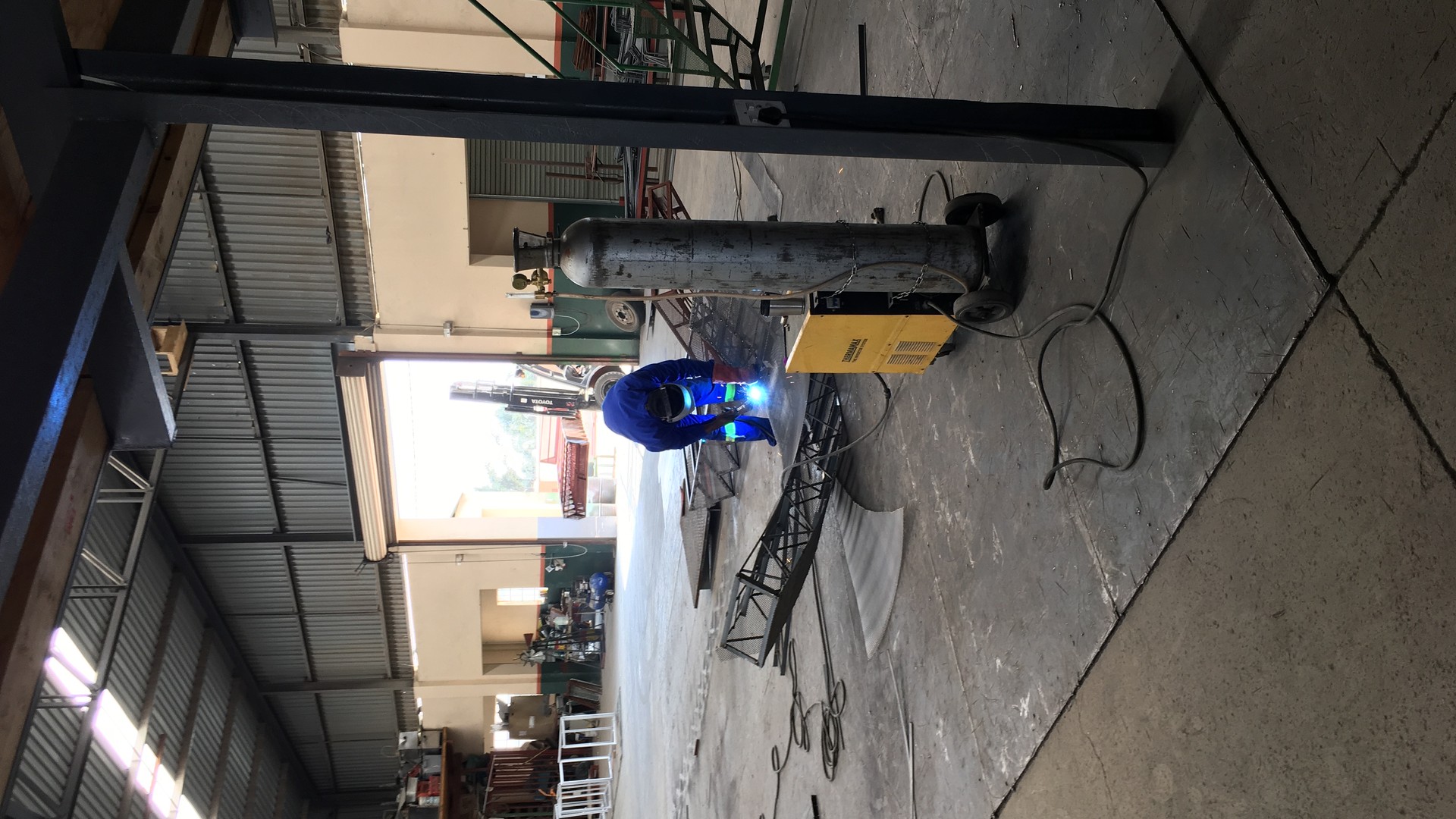
Metal Furniture & Home Goods
02Chair frames, table bases, shelving, decorative metalwork
Material grade, thickness, joint geometry, weld access and part variation.
Explore Solution →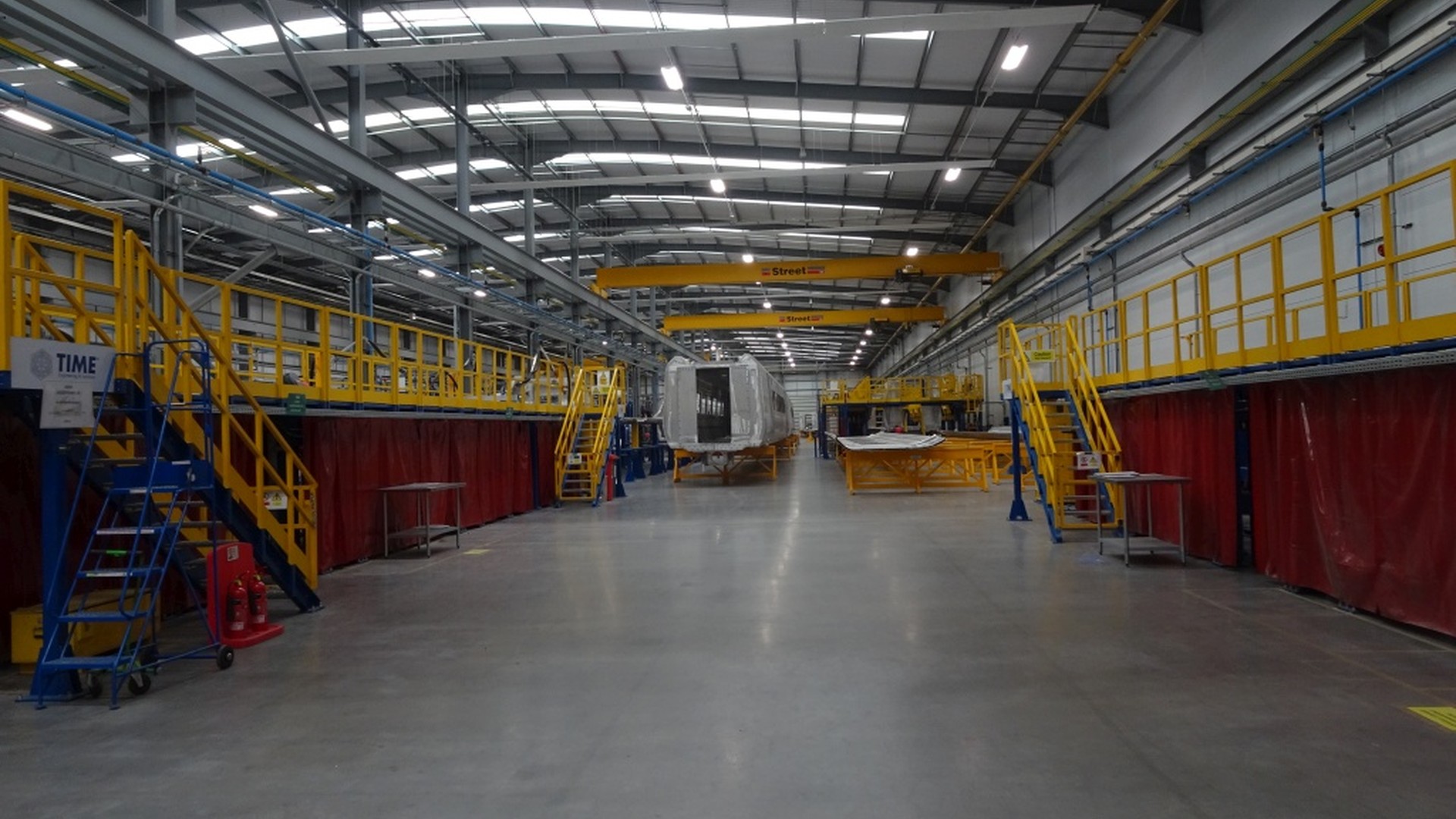
General Fabrication & Machinery
03Machinery frames, enclosures, structural brackets, agricultural equipment
Material grade, thickness, joint geometry, weld access and part variation.
Explore Solution →Prices by quoted configuration
FOB USD prices apply to the named configurations below. A welding package price is not a bare robot arm price.
| Model and quoted configuration | FOB USD price | Quoted inclusion |
|---|---|---|
| CTC007-HJ1077-W-MeA — named welding package | USD 10,000 per set · FOB |
|
| CTC006-HJ1460-W-MeA — named welding package | USD 10,600 per set · FOB |
|
| CTC015-HJ1464-W-MeA — named welding package | USD 10,500 per set · FOB |
|
| CTC020-HJ2027-W-MeA — named welding package | USD 12,000 per set · FOB |
|
| CTR008-HJ1450 — standard machine | USD 7,600 per standard unit · FOB | Robot arm, control cabinet and teach pendant. |
| CTR008-HJ1450 — welding package | USD 9,400 per set · FOB | Standard machine plus NBC-350RL welding power source, wire feeder, torch and wire spool, as listed in the quotation. |
These prices do not establish the cost of a complete installed welding cell.
For a quotation or other requirements, contact our sales team.
CBOXTEC
Get a Welding Automation Quote
Explore CBOXTEC welding robot arms and cart configurations. Share your workpieces, production requirements and destination to discuss a project-specific proposal.
Request a Quote
Contact CBOXTEC to discuss your requirements.
Ask which support options can be offered for your project and who would provide them. Confirm availability, scope, language, charges and any agreed response times in writing before ordering.
A general website estimate cannot establish your project's result. Evaluate representative parts and document the complete cycle, utilization, quality requirements and full costs before estimating savings or payback. Record any agreed performance criteria in the project documents.
Review the actual workpieces, fixtures, process and site conditions with the responsible project team. Agree test and acceptance criteria, training needs and a system-level safety assessment. A collaborative arm alone does not establish that the complete welding system can operate without safeguards.
Resources
Latest Updates
Fresh insights on robotic welding, standards and applications.
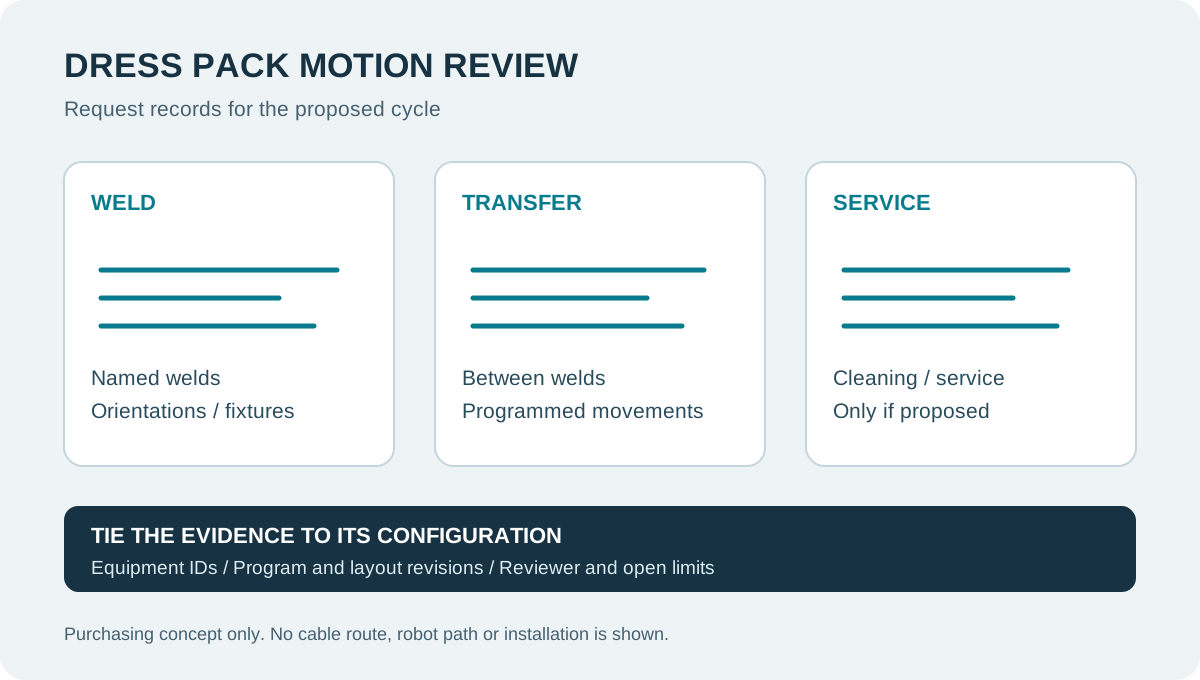
Welding Dress Pack Motion Review | CBOXTEC
Ask which weld, transfer and service motions were reviewed for a welding torch dress pack, and tie the evidence to the quoted equipment and program revision.
Read More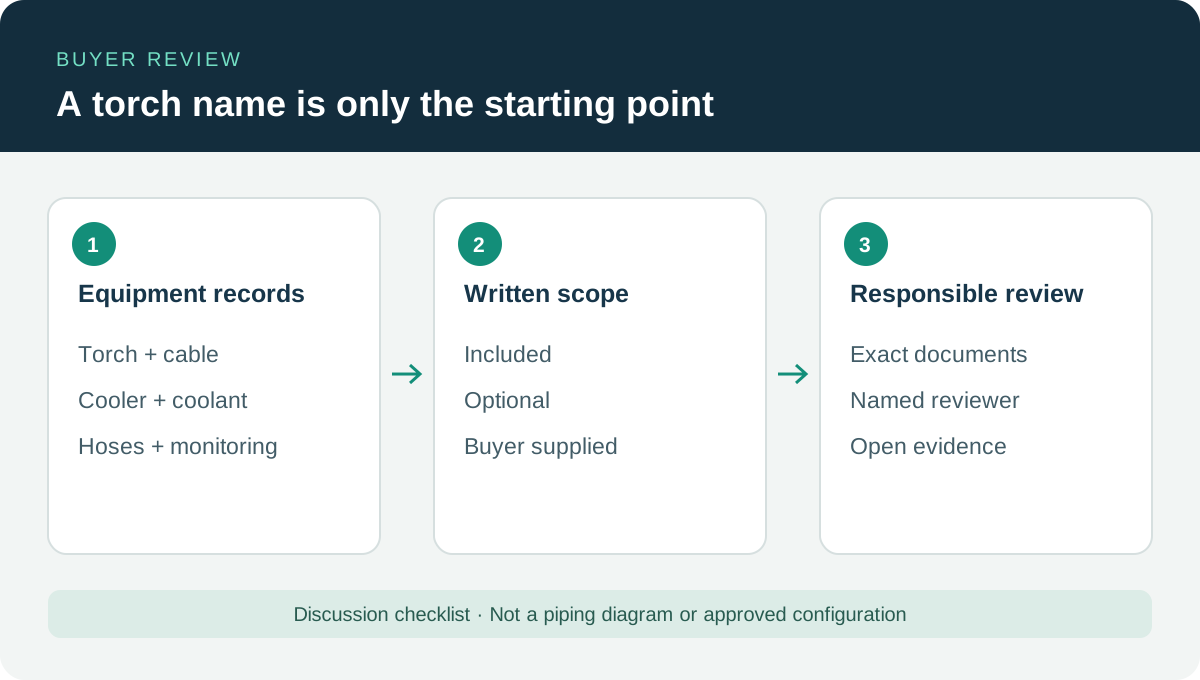
Liquid-cooled Torch Quote: What's Included? | CBOXTEC
Review the torch, cooler, coolant, hoses and monitoring separately in a robotic welding quote, with written supply and verification responsibilities.
Read More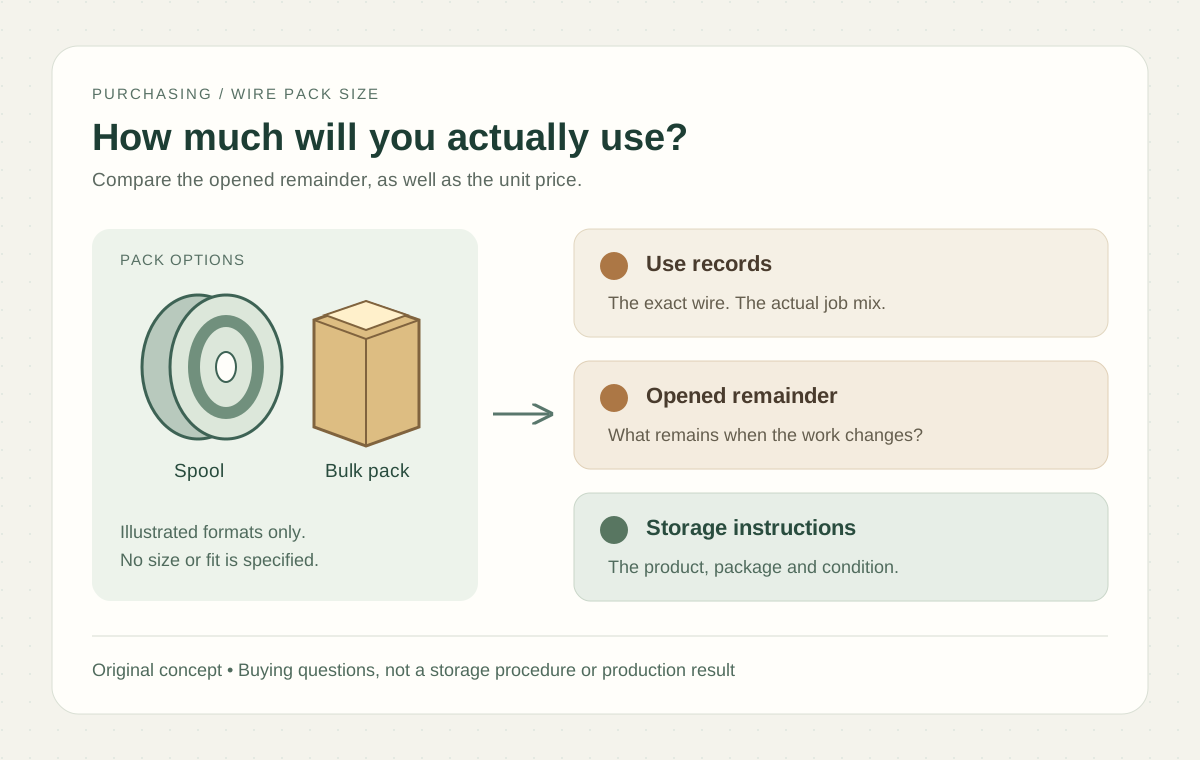
Choosing a Welding Wire Pack Size | CBOXTEC
Before buying bulk welding wire for a robot, compare actual use, leftover stock and product-specific storage requirements rather than price per kilogram alone.
Read More
Resources
Welding Automation Guides
In-depth articles to help you evaluate, select and implement robotic welding systems.
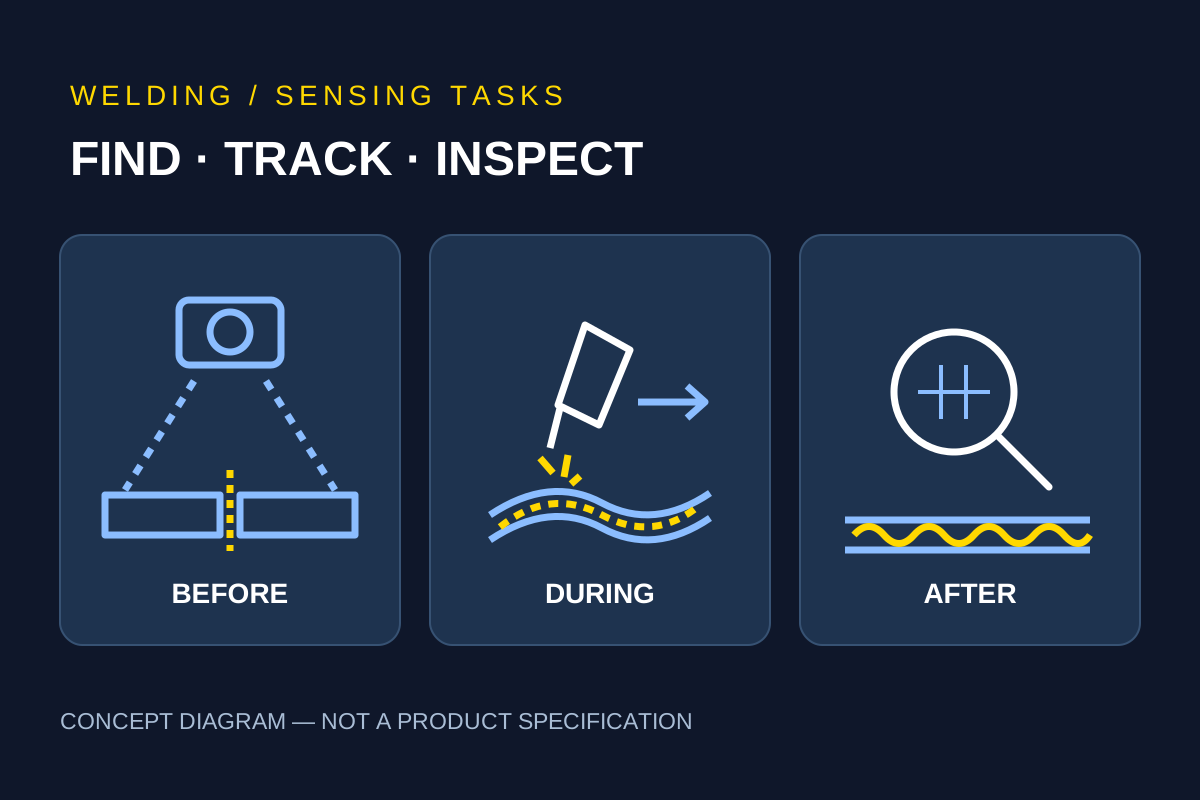
Evaluate Vision and Seam Tracking for Welding | CBOXTEC
Assess a proposed welding vision or seam-tracking option using detection scope, representative variation, interfaces and acceptance trials.
Read More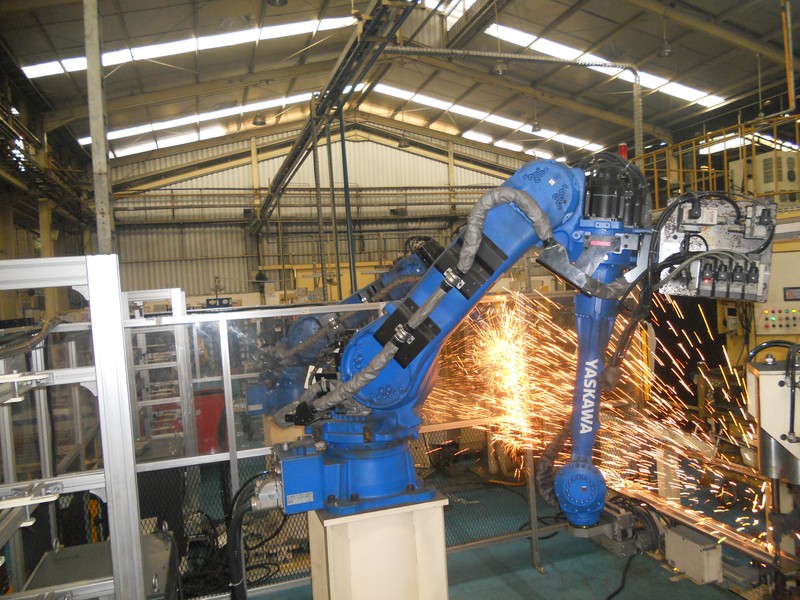
Industrial Welding Robot vs Cobot: Compare Scope | CBOXTEC
Compare an industrial welding robot and a cobot using the same parts, accepted output, complete production cycle and written supply responsibilities.
Read More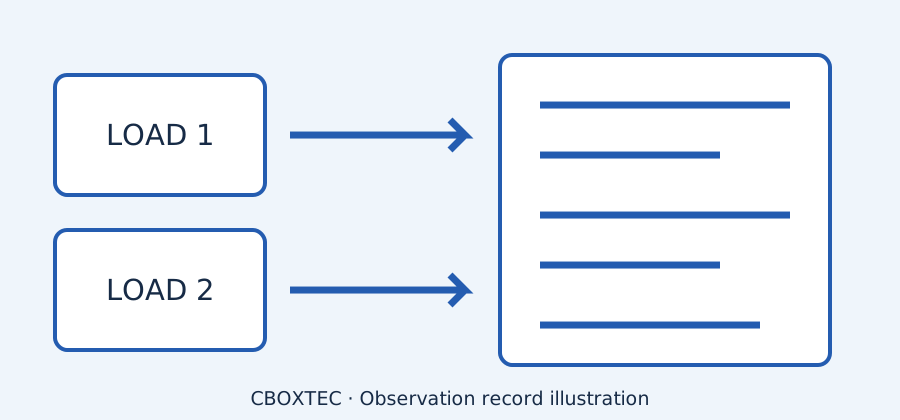
Record Fixture and Repeated Loading Issues | CBOXTEC
Use a repeatable observation record to separate fixture, part-loading and weld-result questions during a welding robot trial.
Read More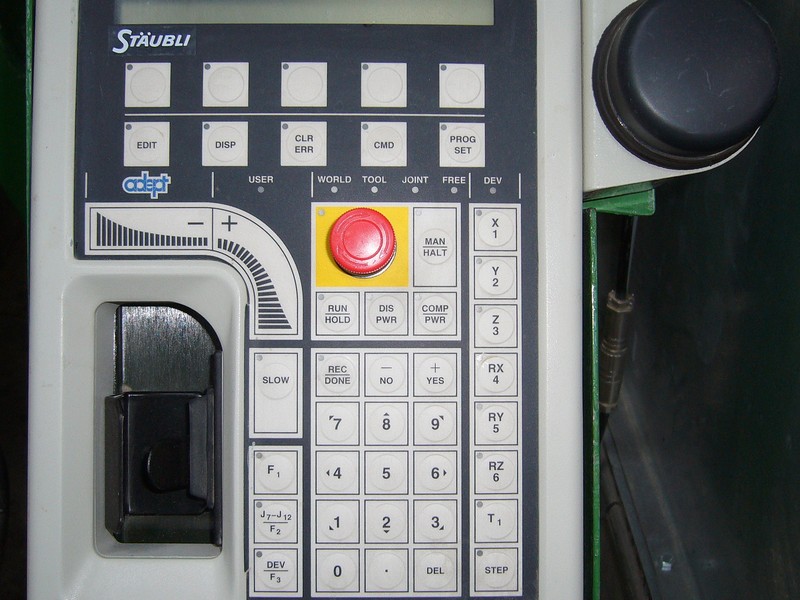
Hand-Guided Welding Teaching: Project Guide | CBOXTEC
Evaluate hand-guided welding teaching through representative parts, operator preparation, program control and agreed acceptance evidence.
Read More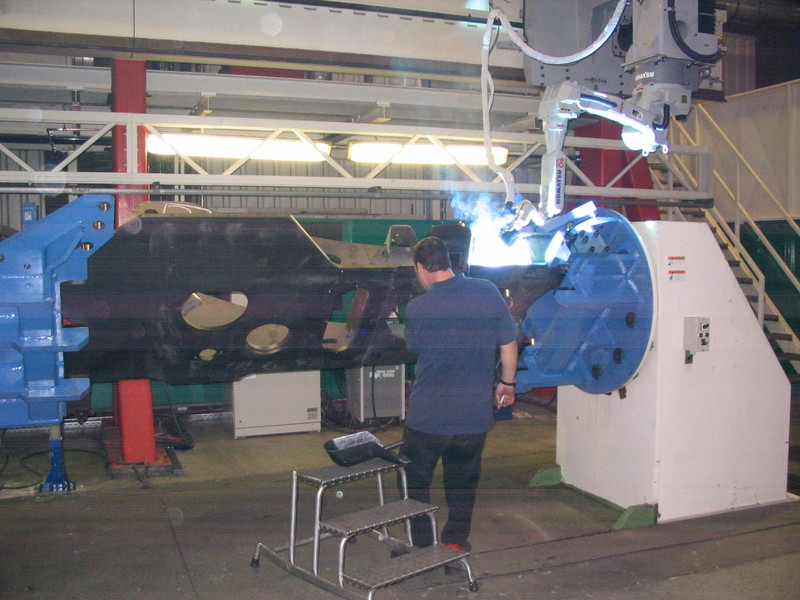
Choosing a Collaborative Welding Arm | CBOXTEC
Prepare a welding arm shortlist using part geometry, tooling loads, process interfaces and project acceptance evidence.
Read More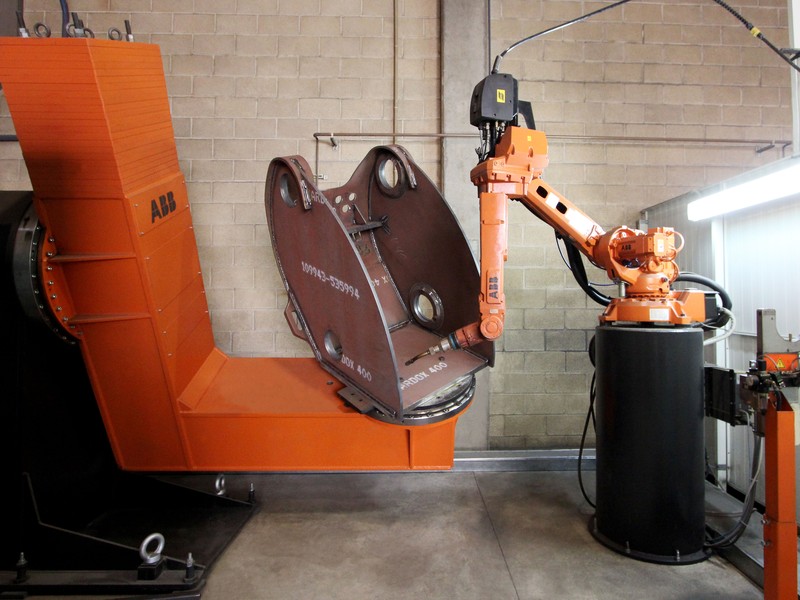
MIG vs TIG Robotic Welding: Project Inputs | CBOXTEC
Compare robotic MIG and TIG proposals using material, joint requirements, inspection criteria, equipment interfaces and sample trials.
Read More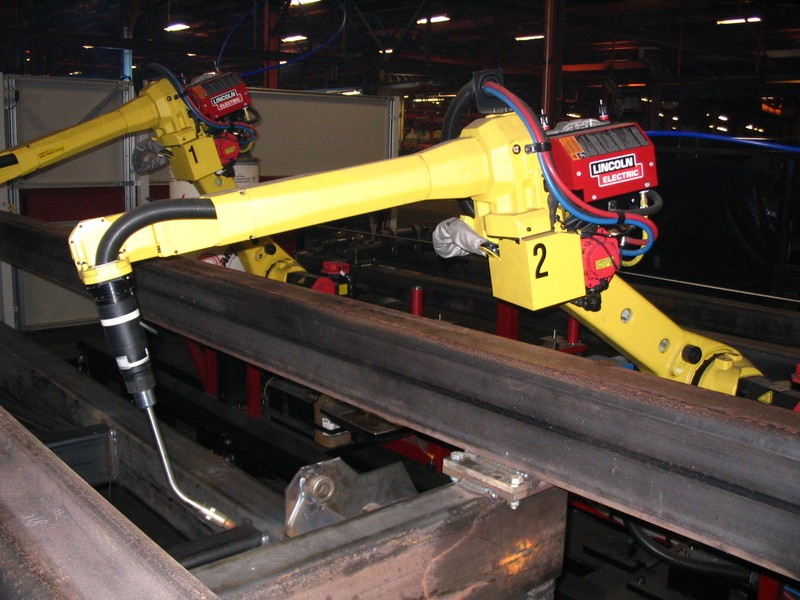
How to Estimate Welding Robot ROI | CBOXTEC
Build a welding robot investment estimate from measured production costs, a complete equipment scope, and realistic utilization assumptions.
Read More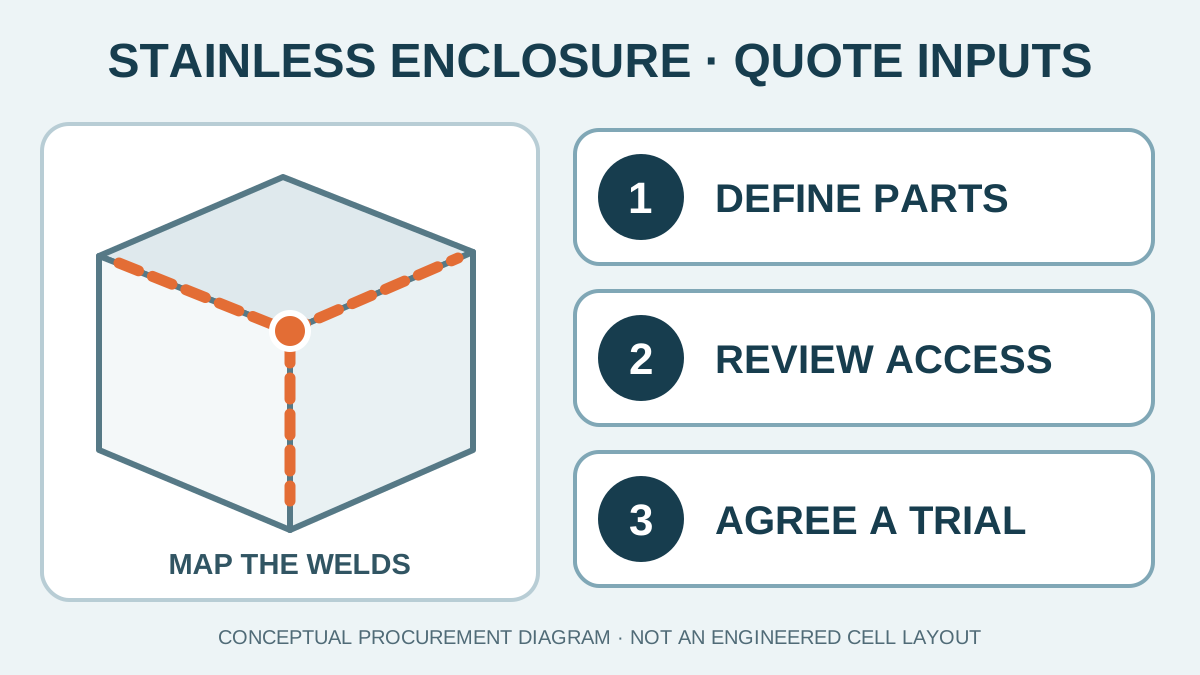
Stainless Steel Enclosure Robot Welding Quote | CBOXTEC
Scope robotic welding for stainless steel boxes with drawings, joint access, fit-up variation, finish criteria and representative trial parts.
Read More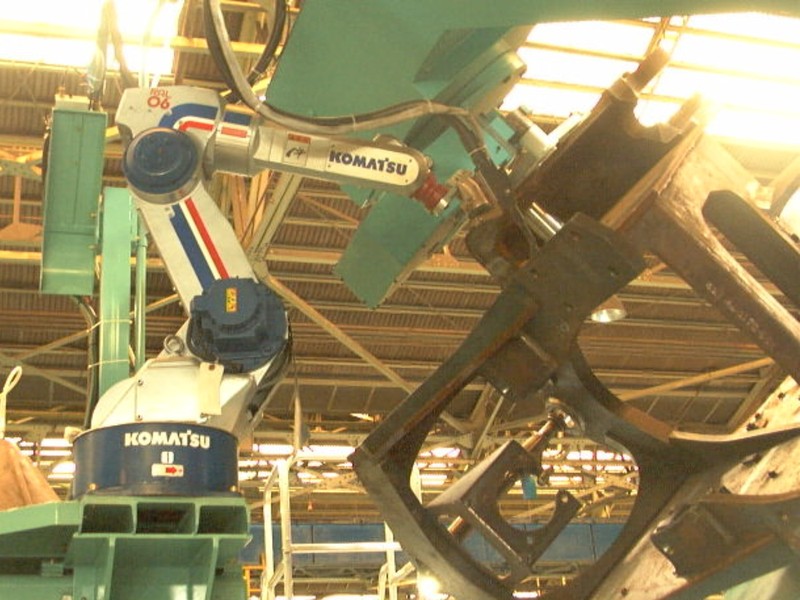
Welding Cart or Standalone Arm: Scope Guide | CBOXTEC
Compare a welding cart with an arm-only proposal by checking integration responsibilities, workholding, relocation needs and written inclusions.
Read More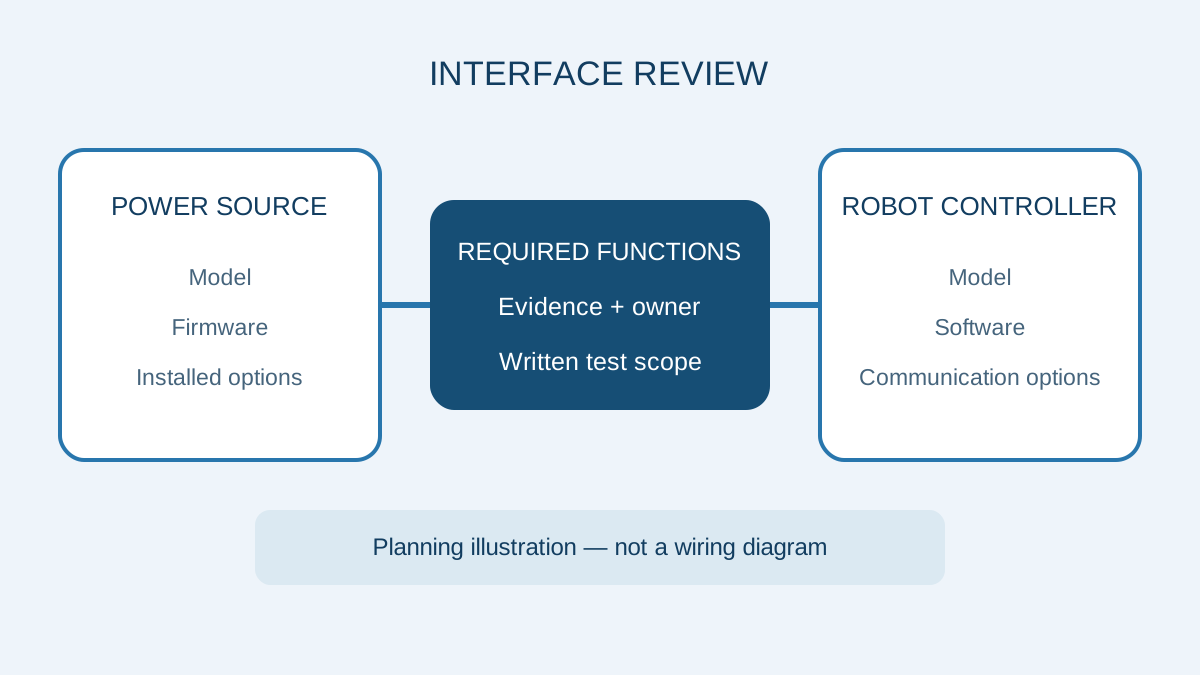
Check Existing Welder Interfaces Before Buying | CBOXTEC
Confirm the welding power source, robot controller, interface options and required functions before budgeting integration of existing equipment.
Read More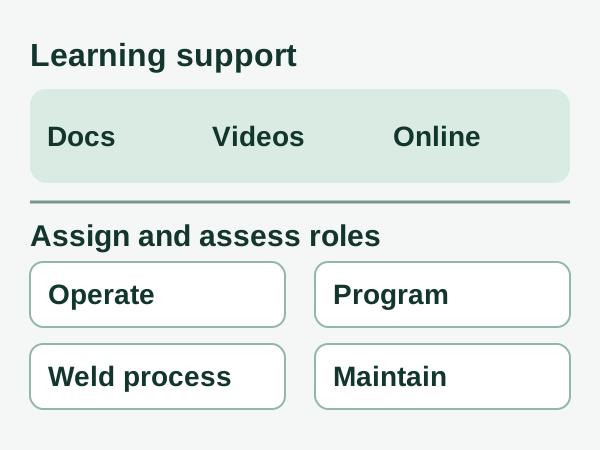
Can Beginners Operate a Welding Robot? Training Support | CBOXTEC
CBOXTEC offers documents, video tutorials and online guidance for welding robot users. Define operator, programming and process roles before a beginner takes charge.
Read More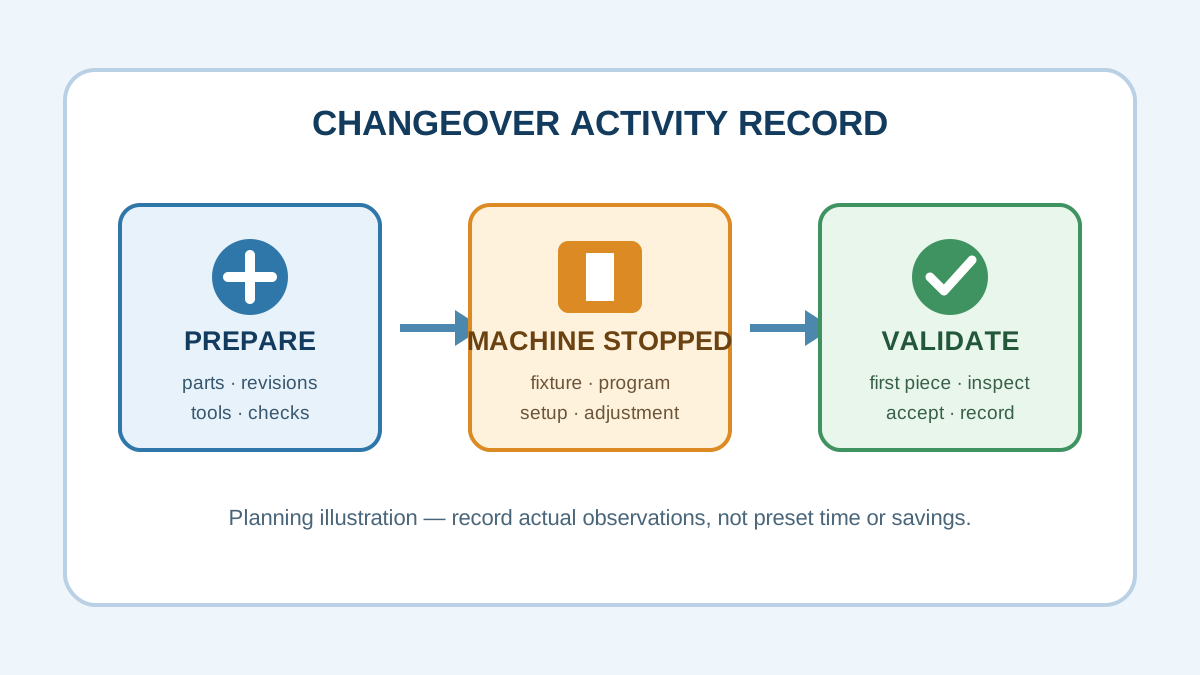
What to Measure During Welding Robot Changeovers | CBOXTEC
Record preparation, stopped-machine work and first-piece validation separately when evaluating welding robot changeovers.
Read More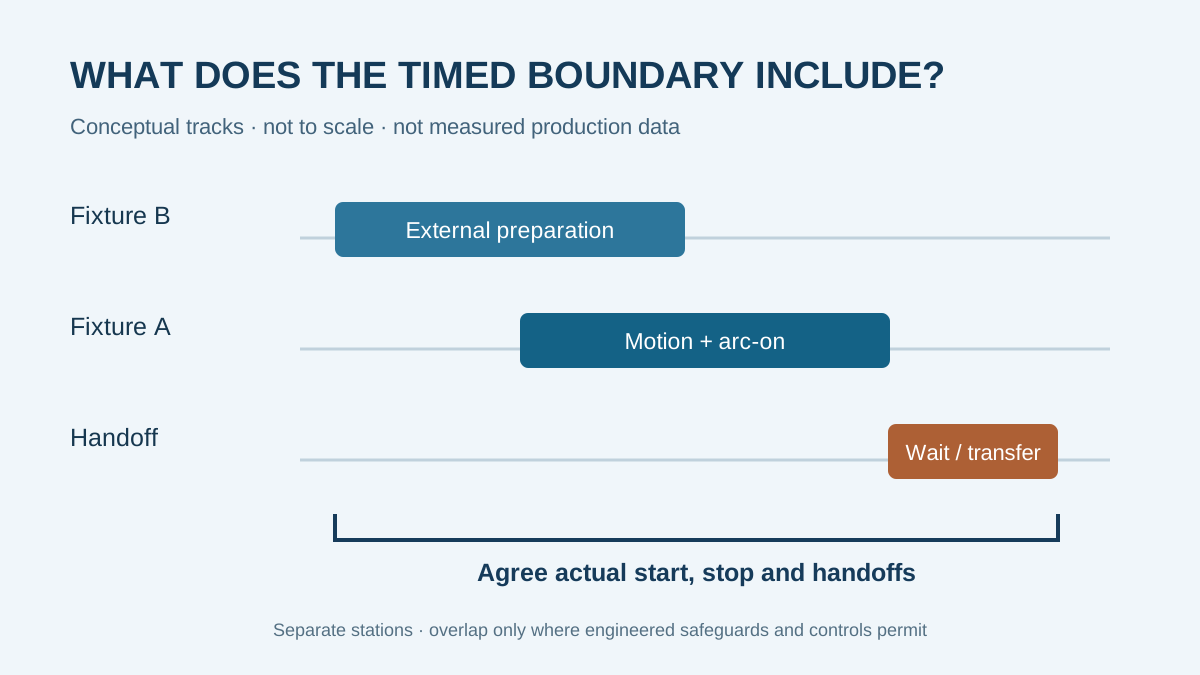
How to Compare Welding Robot Cycle-Time Claims | CBOXTEC
Compare robotic welding cycle-time claims by defining the timed boundary, recording arc-on and waiting separately, and checking accepted output.
Read More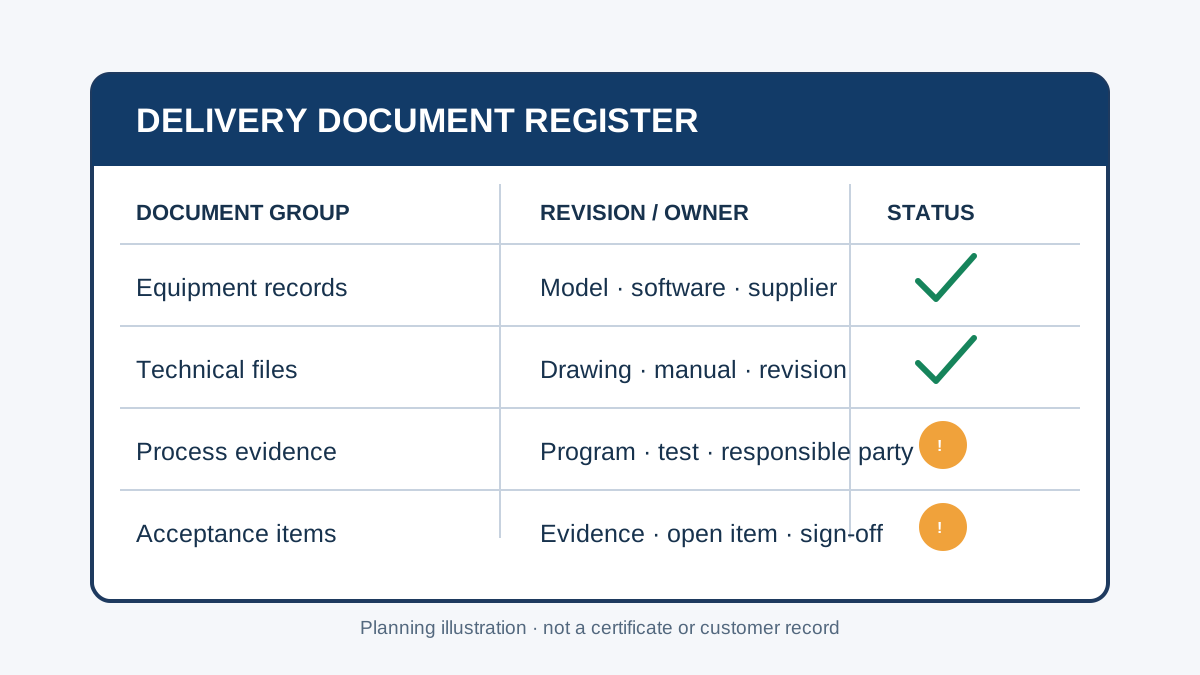
Welding Robot Delivery Document Checklist | CBOXTEC
Use a controlled register to hand over welding robot manuals, configuration records, test evidence and acceptance status.
Read More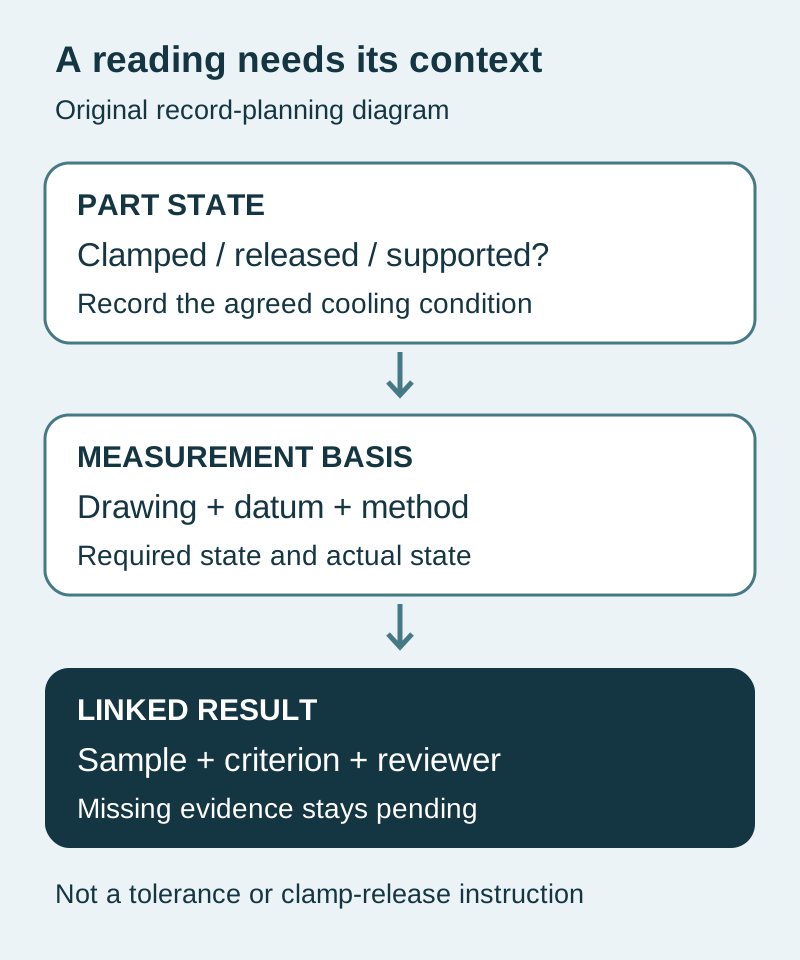
Should a Welding Trial Be Measured Clamped or Released? | CBOXTEC
Agree the part state, drawing reference and measurement record before accepting a robot-welded sample. No universal tolerance or cooling-time promise.
Read More
Welding Dress Pack Motion Review | CBOXTEC
Ask which weld, transfer and service motions were reviewed for a welding torch dress pack, and tie the evidence to the quoted equipment and program revision.
Read More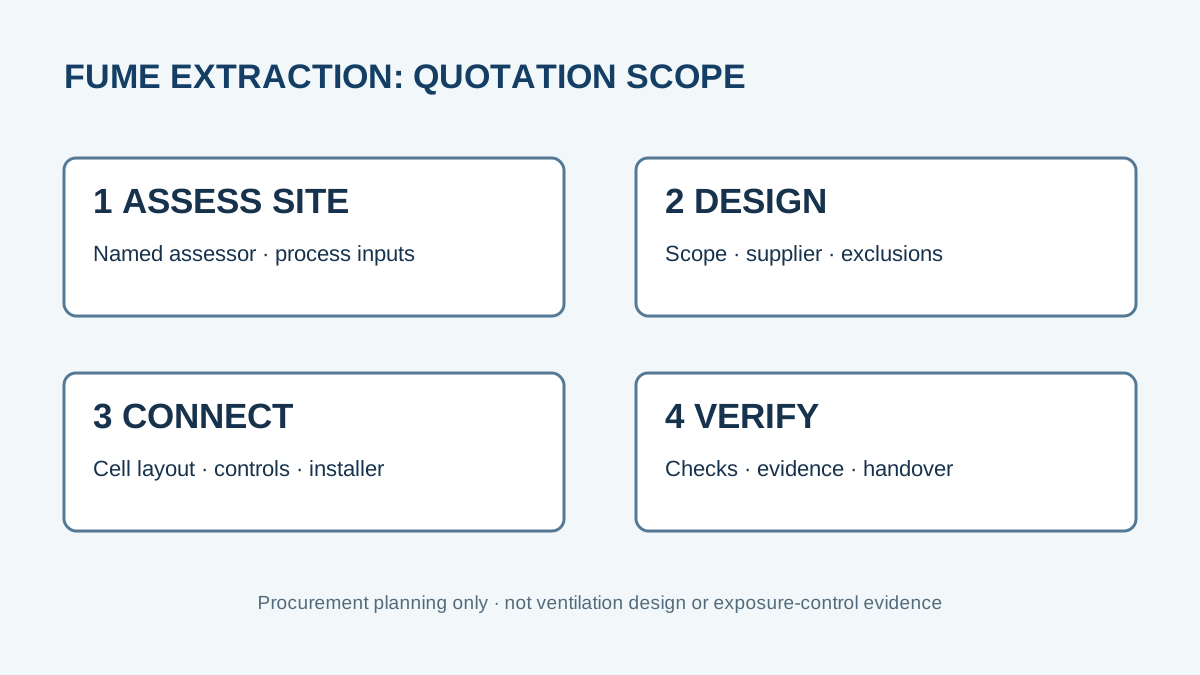
Welding Robot Fume Extraction Quote Scope | CBOXTEC
Clarify fume assessment, extraction design, cell interfaces and acceptance evidence before comparing robotic welding quotations.
Read More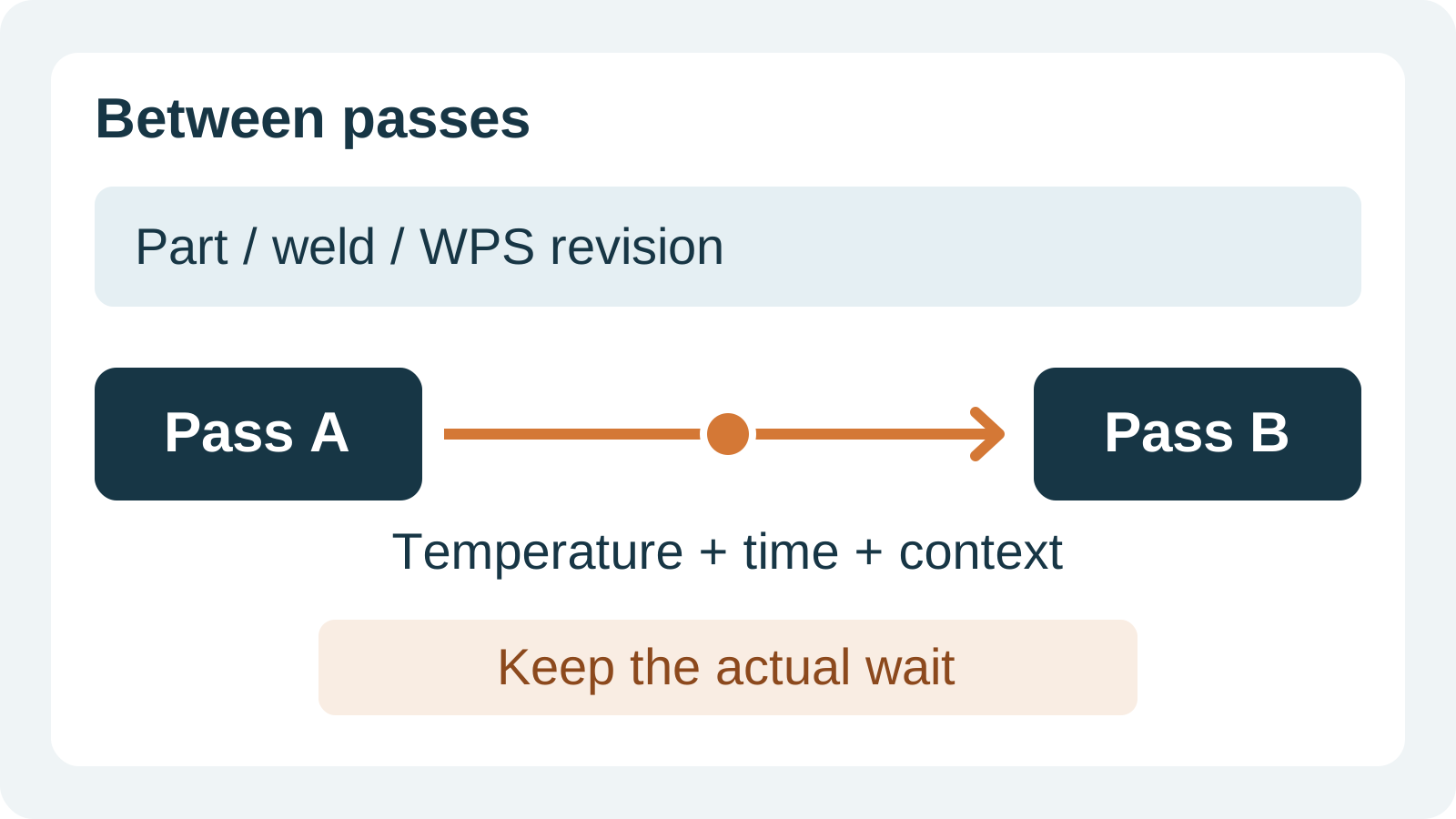
Interpass Records for a Robot Weld Trial | CBOXTEC
For a multilayer robot weld trial, link interpass temperature observations to the applicable procedure, weld pass and actual waiting time before comparing quotes.
Read More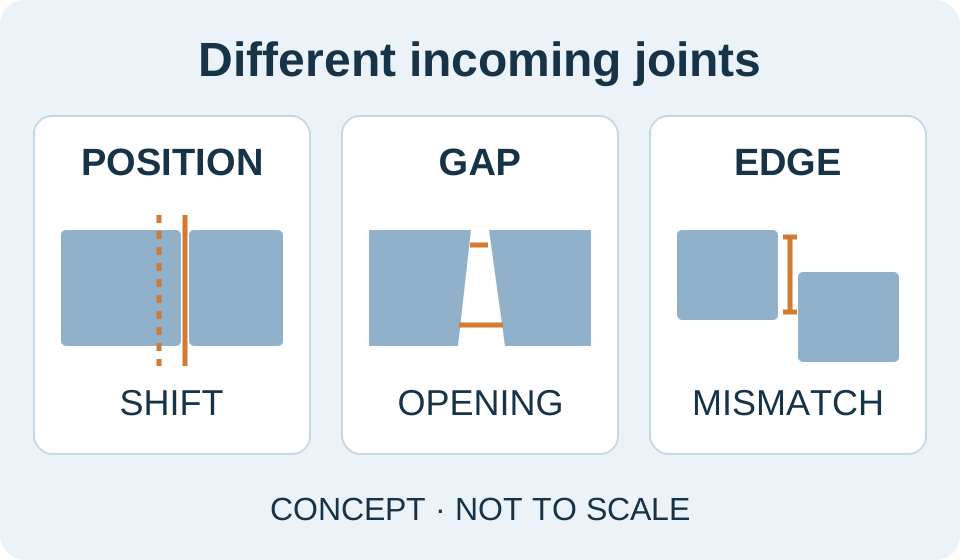
Can a Robot Weld Trial Cover Varying Gaps? | CBOXTEC
A successful robot weld sample covers its tested fit-up. Compare changing gaps and edge mismatch with production parts before extending that result.
Read More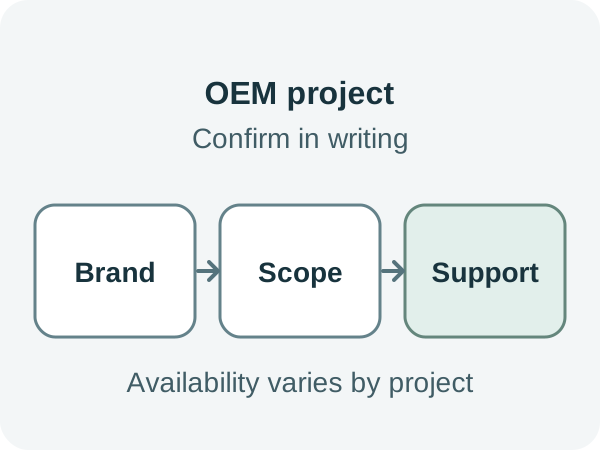
Can Distributors Sell Welding Robots Under Their Own Brand? | CBOXTEC
CBOXTEC can support OEM welding robot supply under a distributor's own brand. Confirm each branding element and project responsibility in writing.
Read More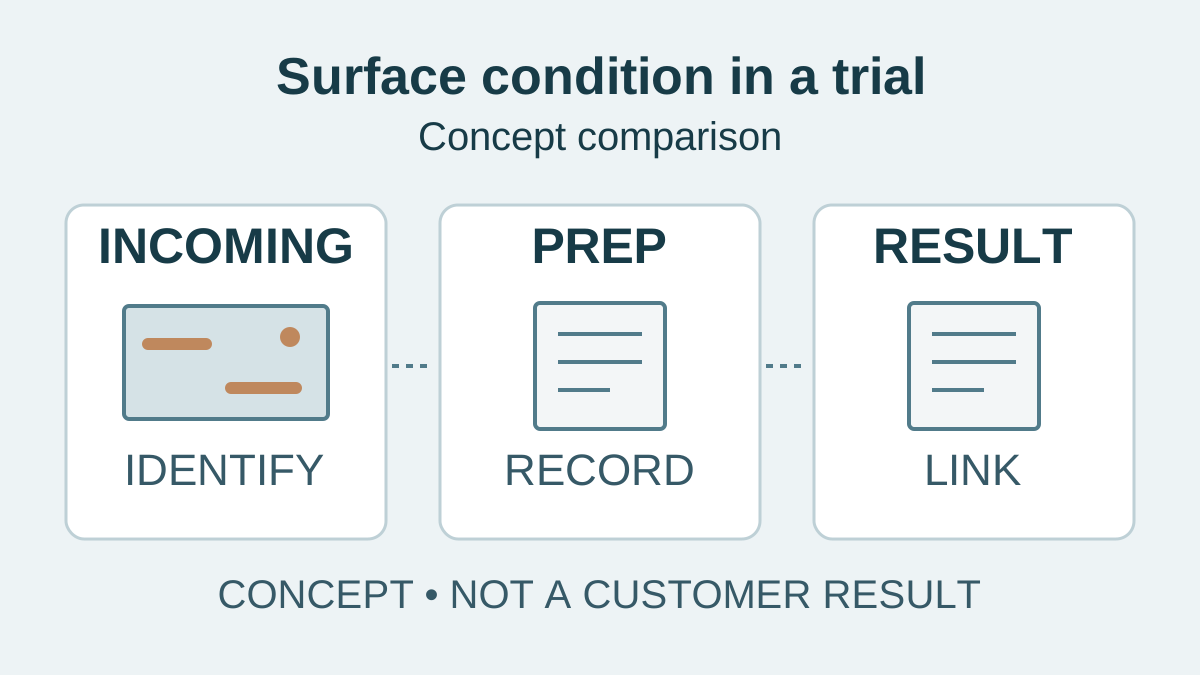
Does a Clean Weld Sample Represent Production? | CBOXTEC
A cleaned robot weld sample represents that preparation. Compare normal incoming surfaces, extra preparation and inspection before planning production.
Read More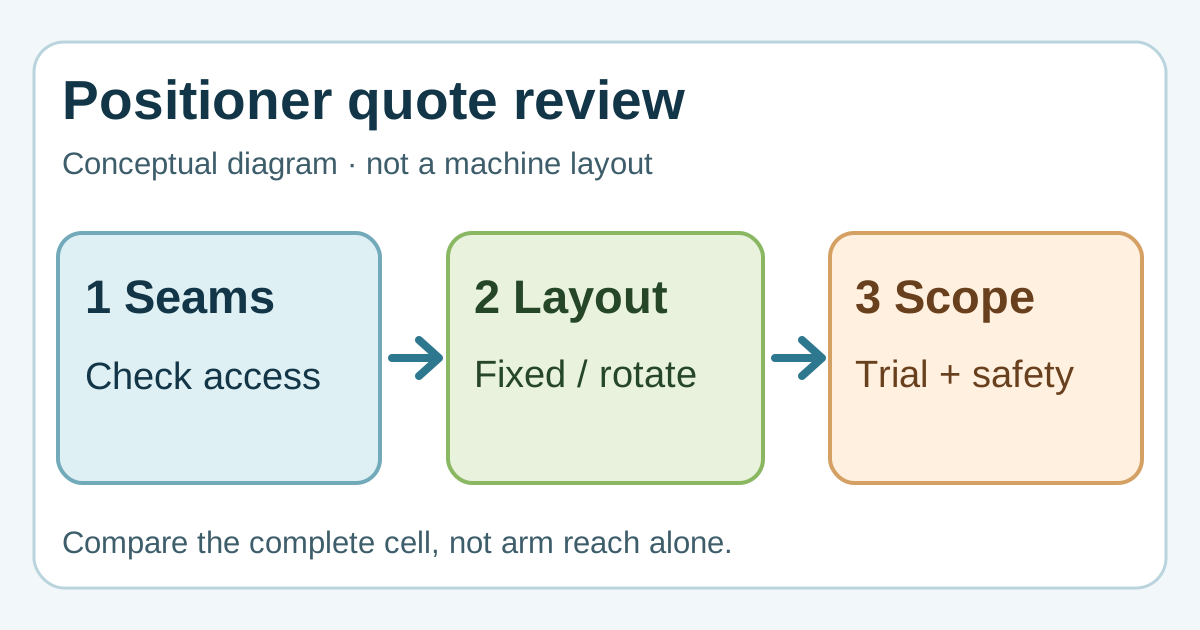
Does a Welding Robot Need a Positioner? | CBOXTEC
Decide whether a workpiece positioner belongs in a robotic welding quote by reviewing seam access, fixture load, motion and trial scope.
Read More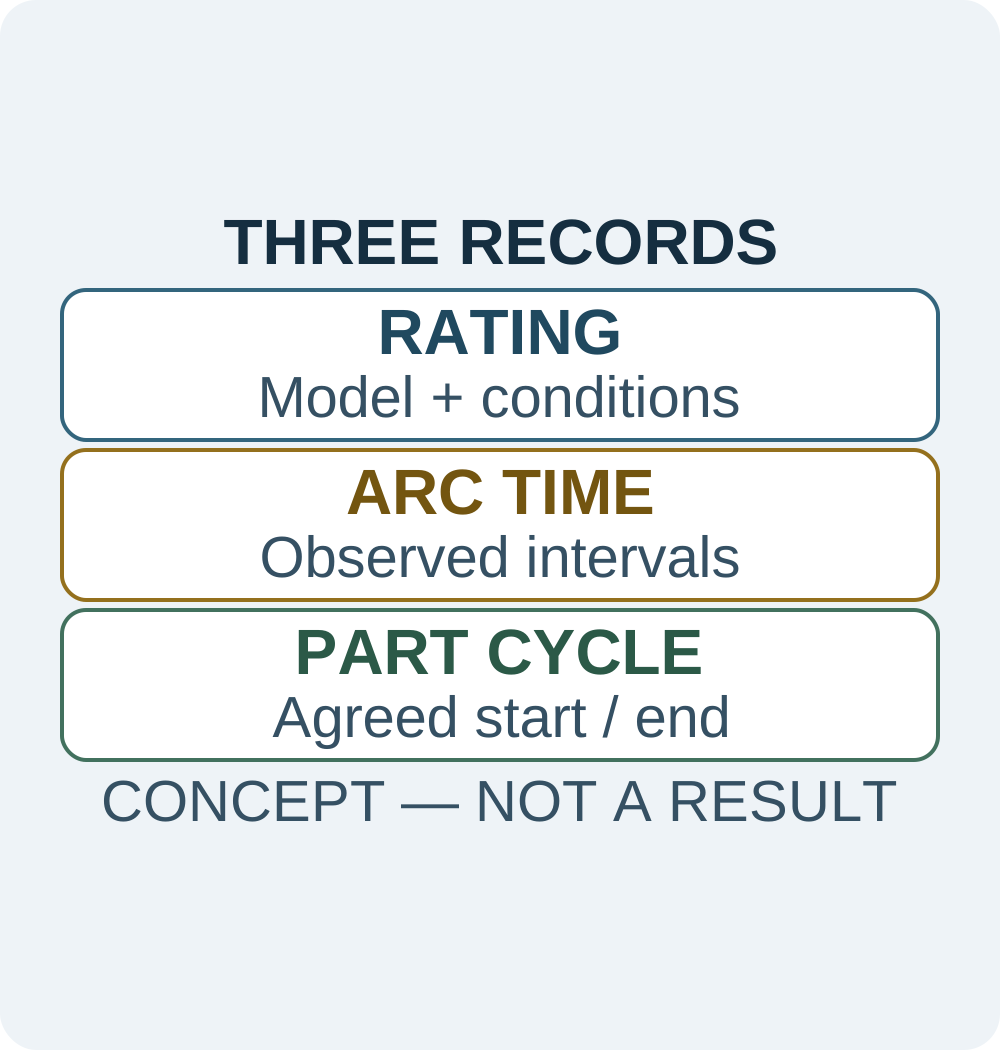
Is Welder Duty Cycle the Same as Robot Cycle Time? | CBOXTEC
Separate a welding power source's thermal duty-cycle rating from measured robot production time, and check the actual torch and trial conditions.
Read More
Discuss a Welding Robot Project | CBOXTEC
Start with your part and the problem you want to solve. Discuss requirements before confirming a welding robot proposal and quotation.
Read More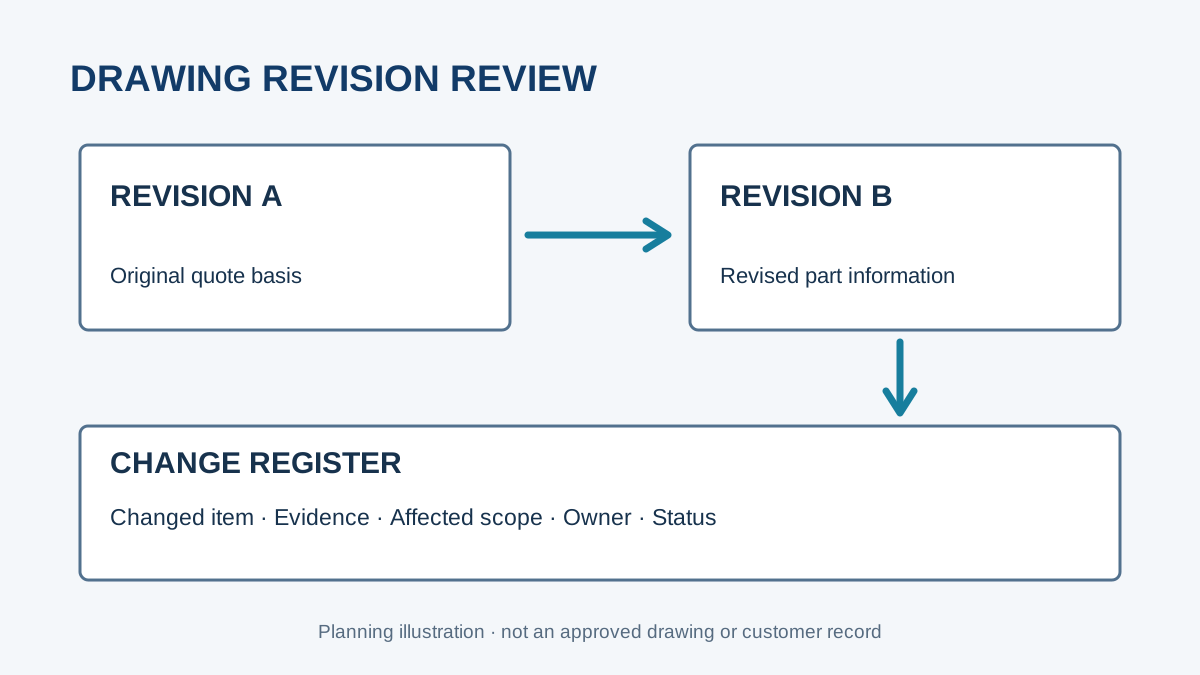
Track Drawing Revisions in Welding Robot Quotes | CBOXTEC
Record drawing versions, change impacts and confirmation owners before revising a welding robot project quotation.
Read More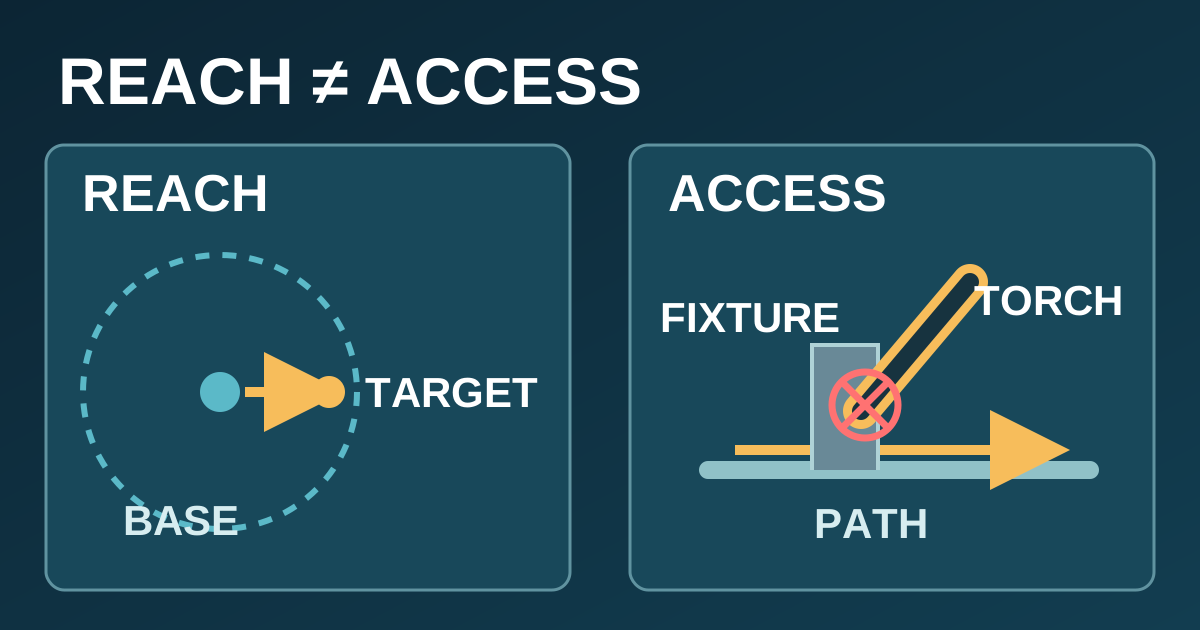
Why Robot Reach Does Not Guarantee Welding-Torch Access | CBOXTEC
A robot's reach is only a first screen for welding. Check torch orientation, fixture clearance and the full seam path with an integrator before selecting a cell.
Read More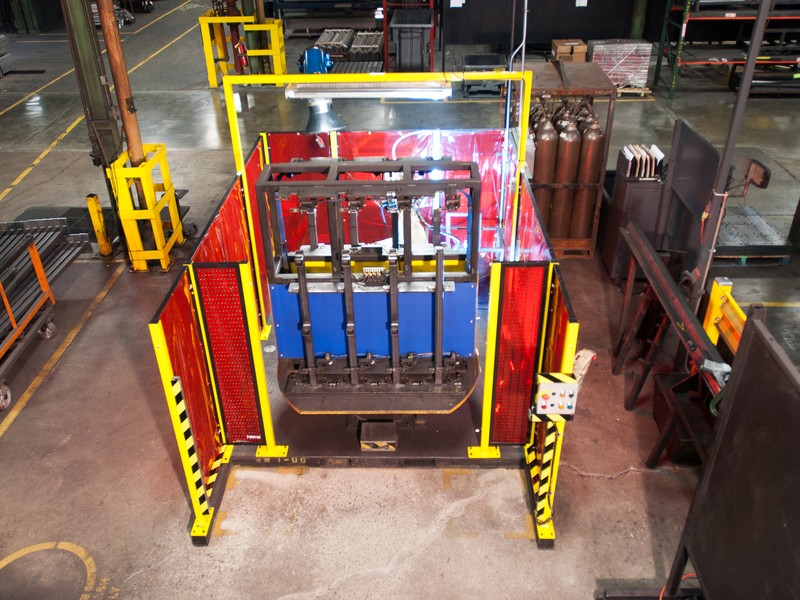
Welding Robot Safety Standards: Scope and Evidence | CBOXTEC
Check welding robot safety standards by project scope, responsible reviewers and the risk-assessment, validation and handover evidence to request.
Read More
What to Prepare Before a Welding Robot Sample Trial | CBOXTEC
Prepare representative parts, acceptance criteria and trial records before evaluating a welding robot for your production application.
Read More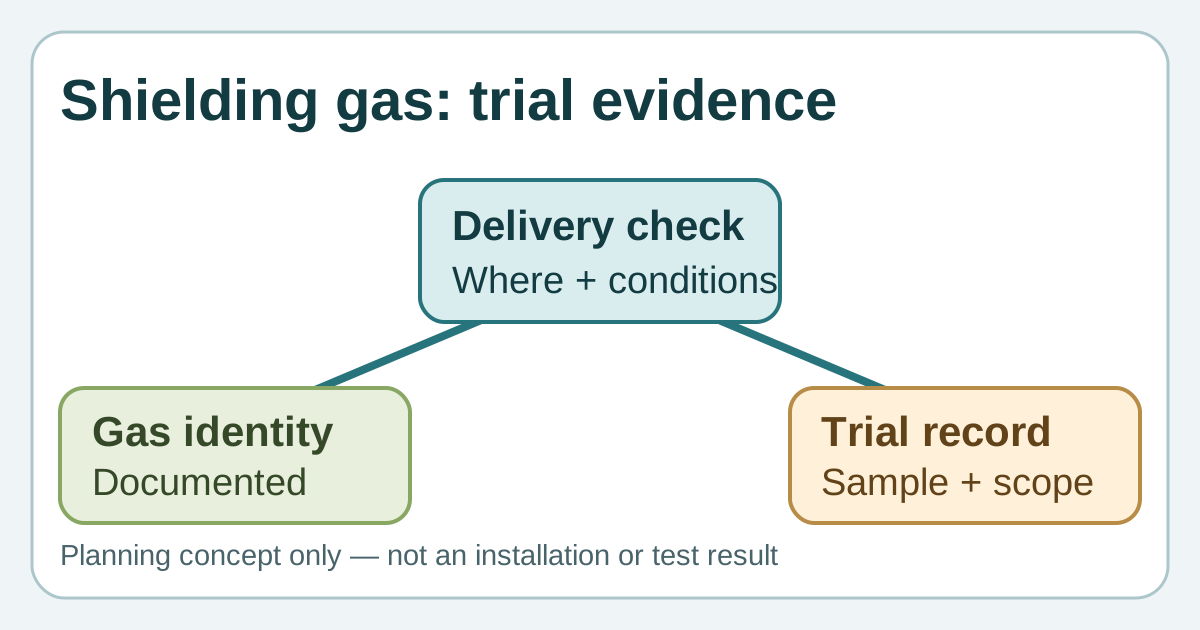
What Gas Supply Should a Welding Robot Trial Confirm? | CBOXTEC
Define shielding-gas supply, trial records and quote responsibilities before accepting a robotic welding sample. No universal flow setting or included-gas promise.
Read More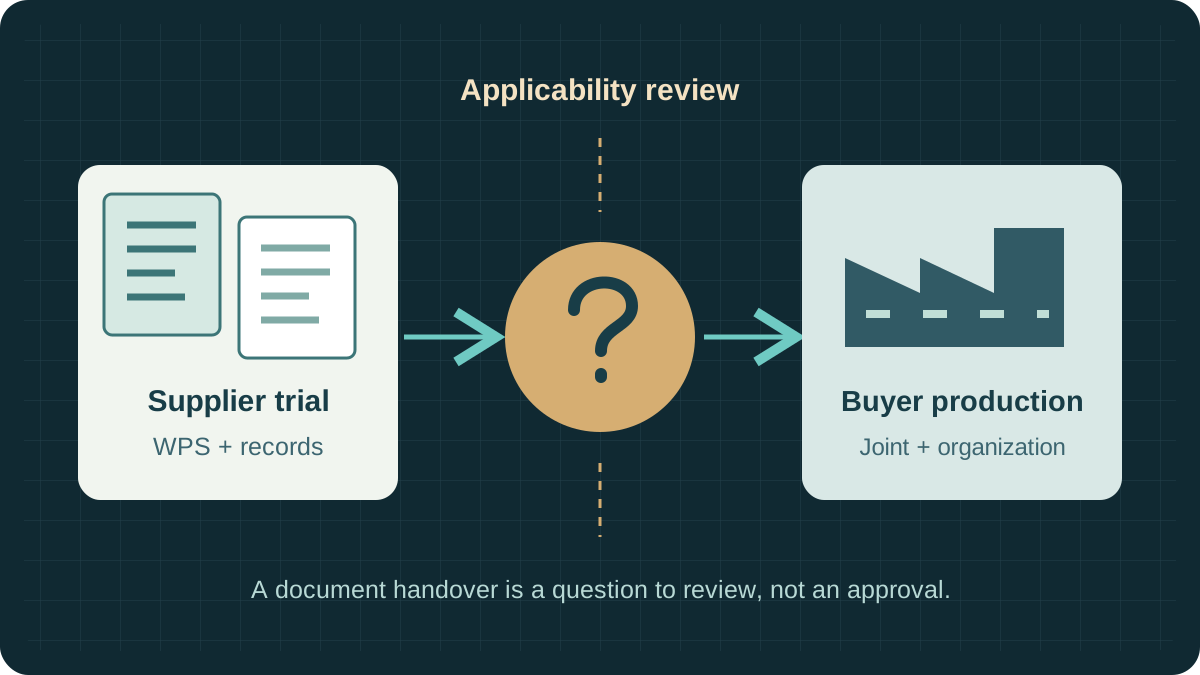
Can You Use a Supplier's Welding WPS? | CBOXTEC
Before using a supplier's trial WPS at your factory, ask whether it applies to your production organization and joint, and what evidence supports that use.
Read More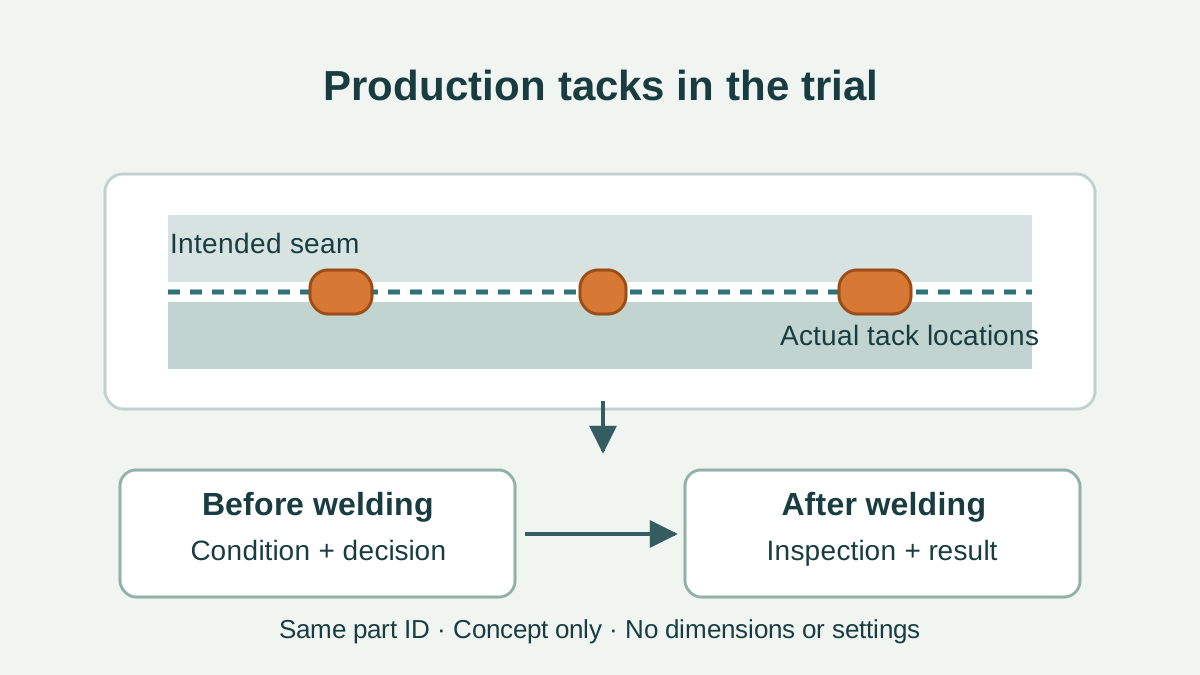
Should Robot Weld Trials Include Tack Welds? | CBOXTEC
Match a robot welding trial to production tack welds, document whether tacks remain or are removed, and connect the incoming joint to the inspected result.
Read More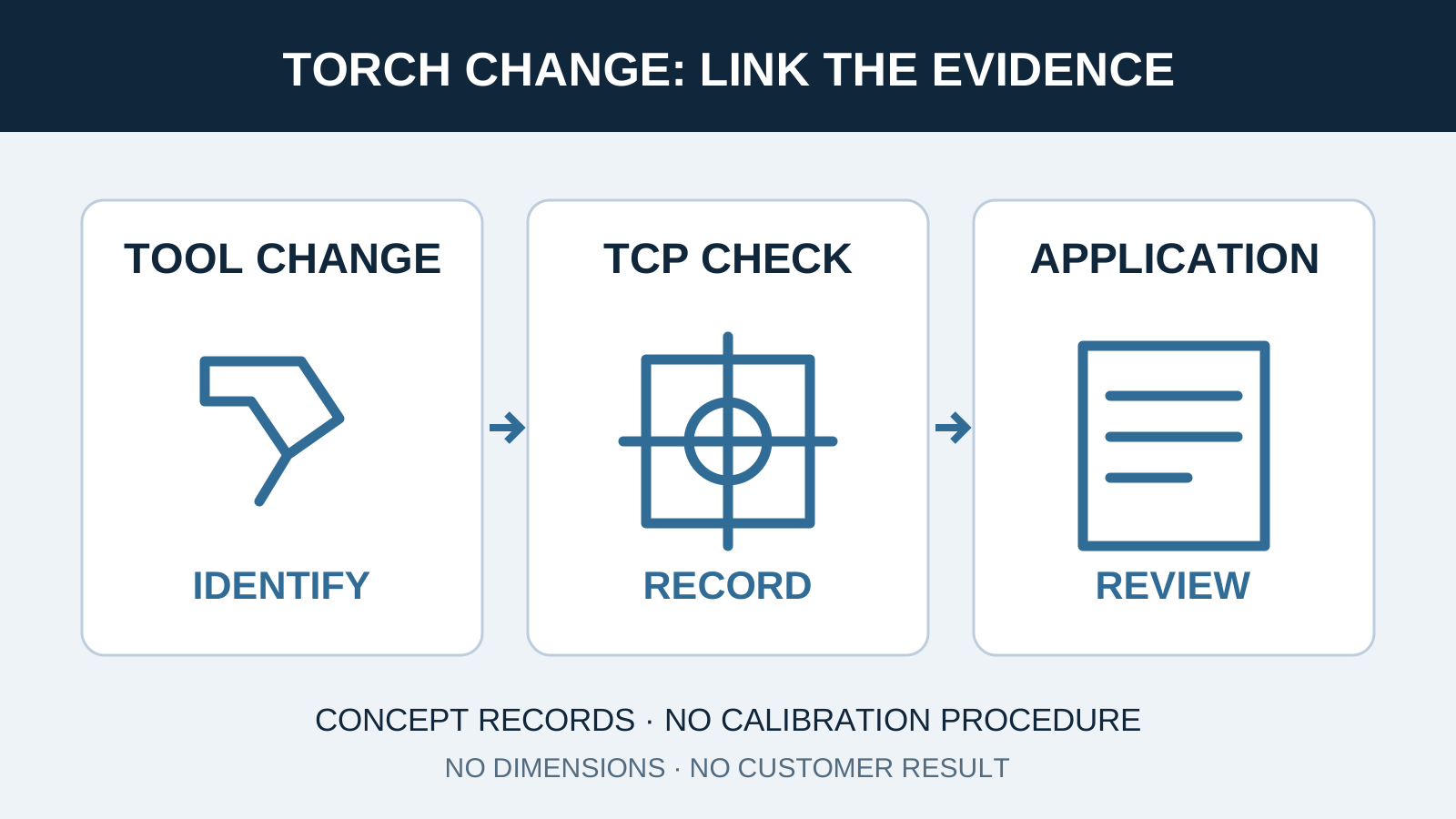
Does Changing a Welding Torch Require a TCP Check? | CBOXTEC
Before reusing robot weld paths after a torch change, agree how the installed tool, TCP check and application validation will be recorded and reviewed.
Read More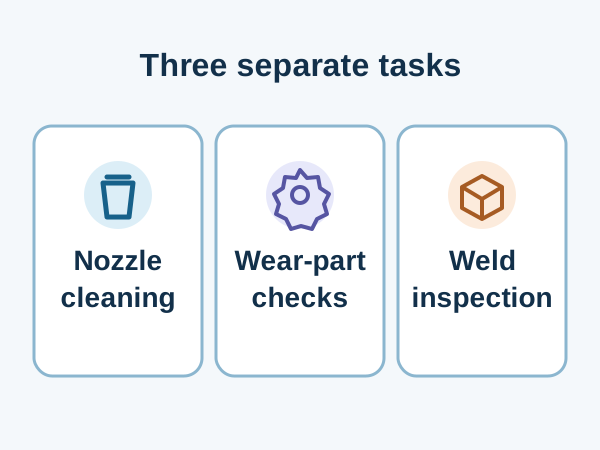
Welding Robot Torch Maintenance: MIG/MAG Checks | CBOXTEC
Plan MIG/MAG welding robot torch maintenance by separating nozzle cleaning, wear-part checks and weld inspection, with equipment guidance and trial evidence.
Read More
Liquid-cooled Torch Quote: What's Included? | CBOXTEC
Review the torch, cooler, coolant, hoses and monitoring separately in a robotic welding quote, with written supply and verification responsibilities.
Read More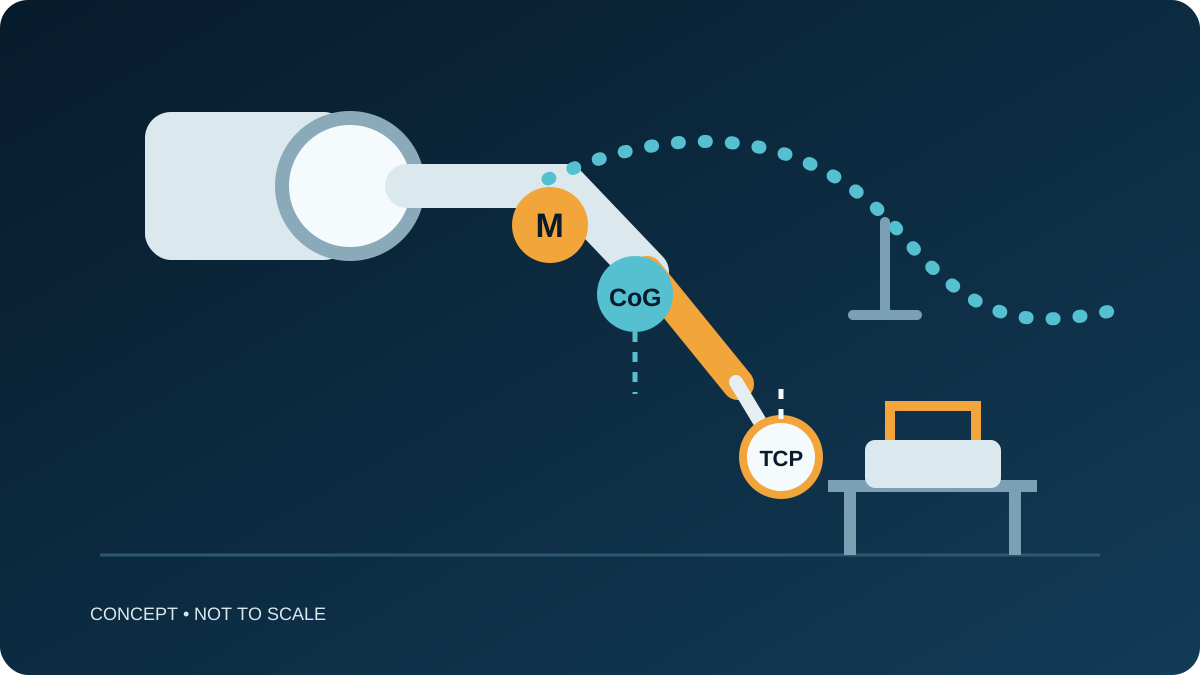
What Counts Toward Welding Robot Payload? | CBOXTEC
Check welding robot payload by separating the torch assembly, carried part, center of gravity, inertia and hose-routing effects before model selection.
Read More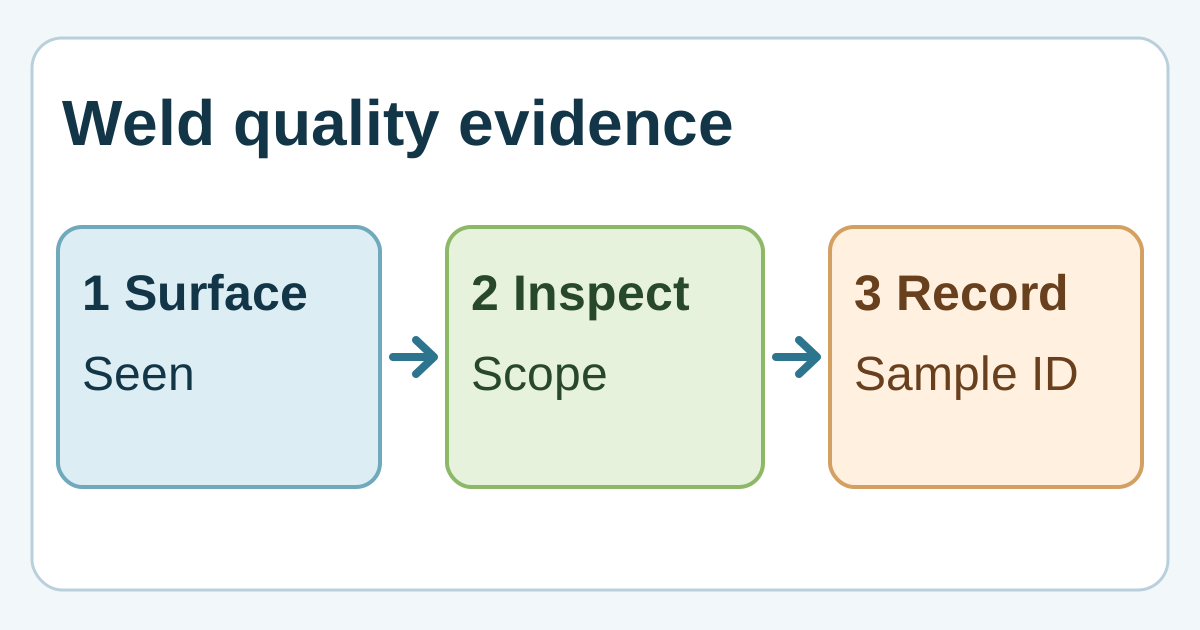
Can a Good-Looking Robot Weld Prove Weld Quality? | CBOXTEC
A neat robot weld is useful visual evidence, not proof of internal soundness. Define the sample, inspection scope and reviewer before accepting a result.
Read More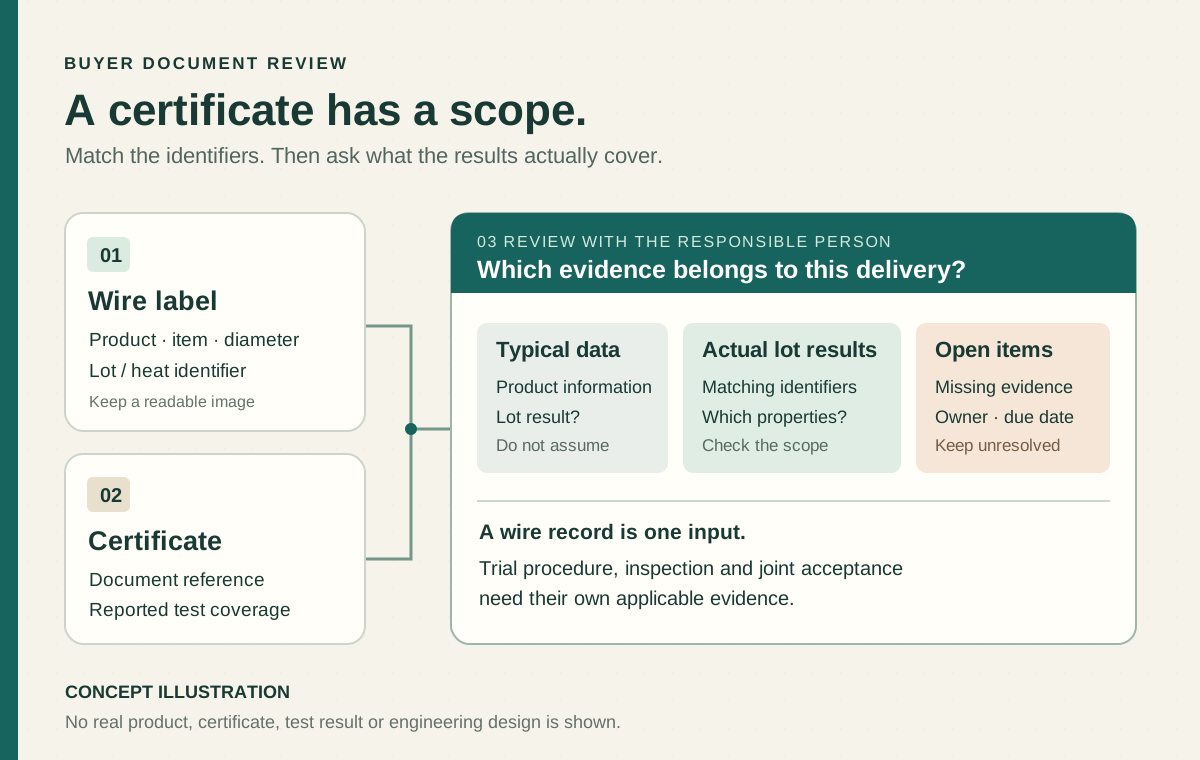
Wire Certificates for Robot Weld Trials | CBOXTEC
Before a robot weld trial, match the wire certificate to the supplied product and lot, distinguish typical from actual results, and agree which tests are needed.
Read More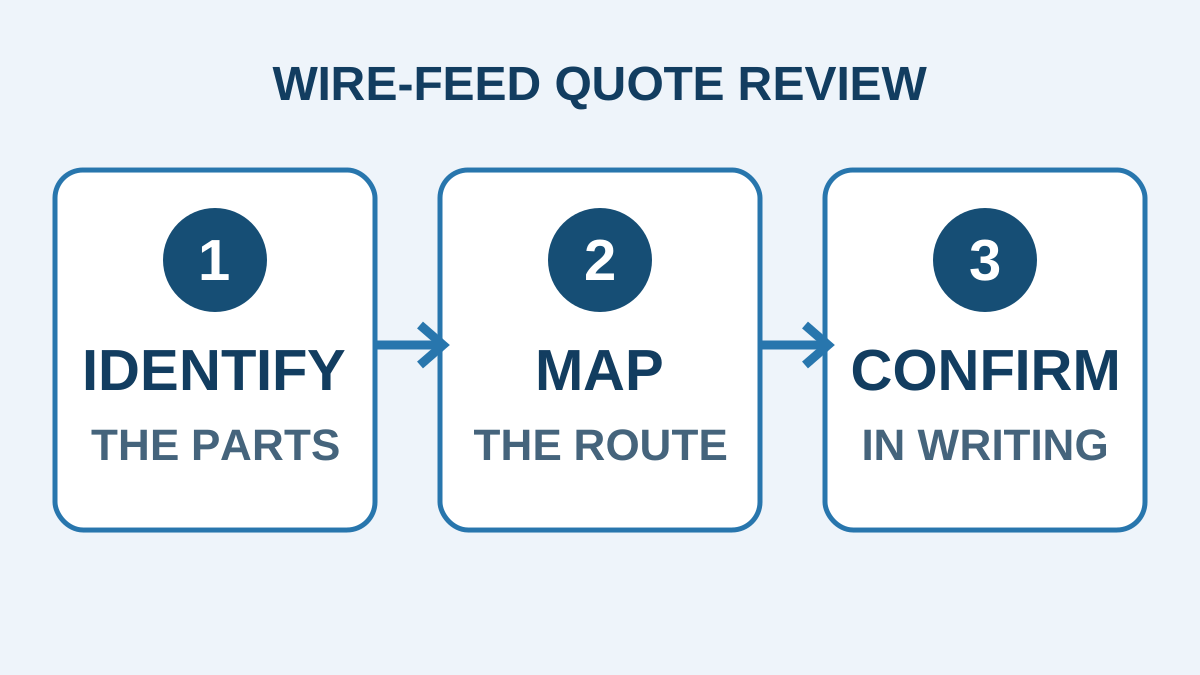
What to Check About Robotic MIG/MAG Wire Feeding Before a Quote | CBOXTEC
Give an integrator the exact wire, feeder, torch and cable-path details for a robotic MIG/MAG quote, then ask the equipment supplier to confirm the proposed interfaces.
Read More
Choosing a Welding Wire Pack Size | CBOXTEC
Before buying bulk welding wire for a robot, compare actual use, leftover stock and product-specific storage requirements rather than price per kilogram alone.
Read More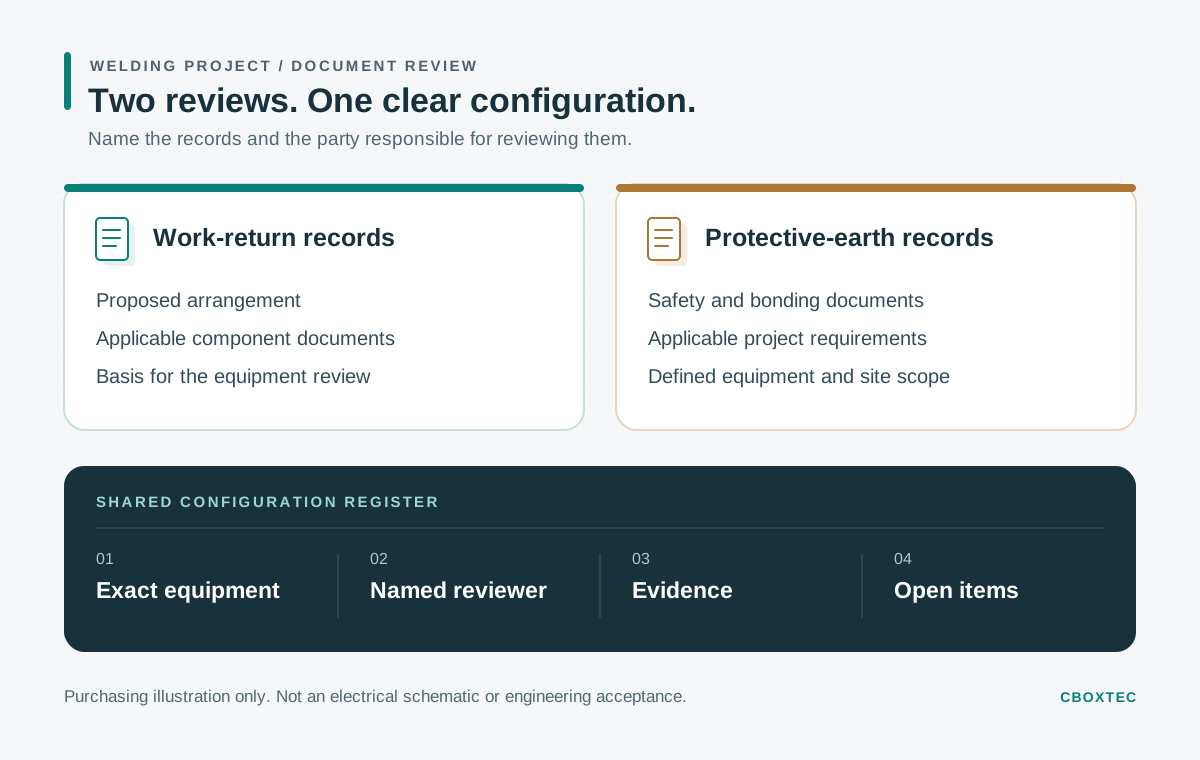
Welding Work-Return Circuit Review | CBOXTEC
Before ordering a welding arm project, request separate work-return and protective-earth records, exact equipment manuals and a named engineering reviewer.
Read More
Track Welding Trial Samples Across Batches | CBOXTEC
Link each trial sample to its batch, drawing revision and result before extending conclusions to production.
Read More