

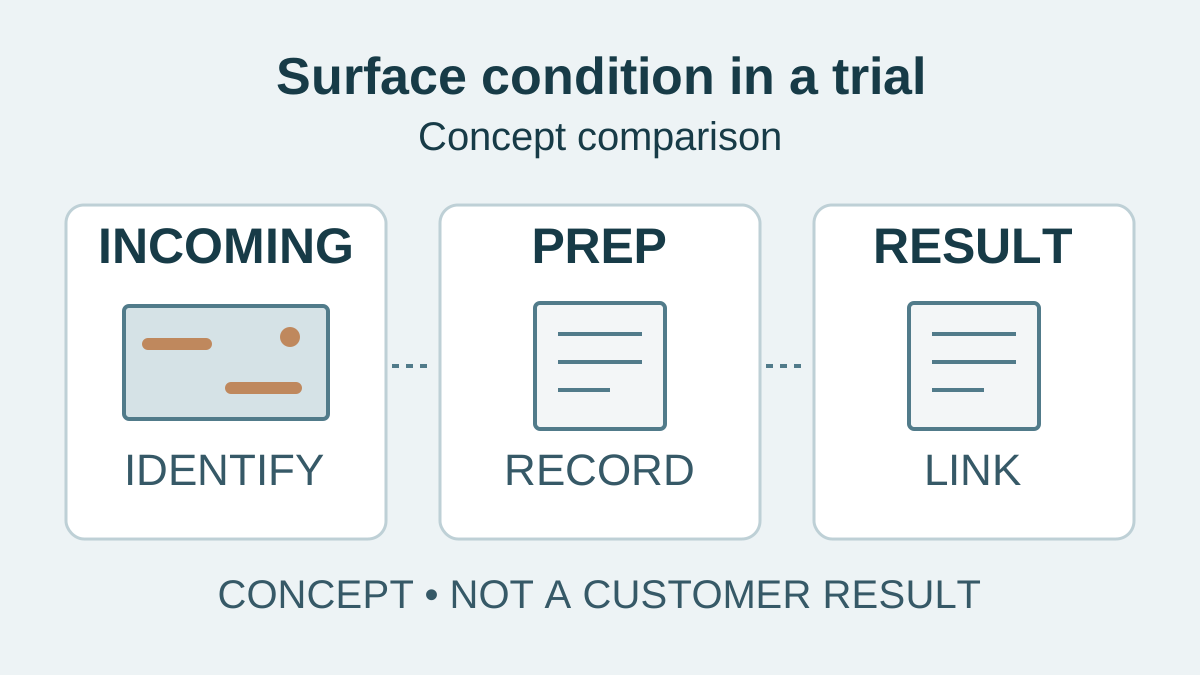
Original concept diagram: incoming surface, trial preparation and the linked result are separate records. It shows no cleaning method, coating limit, equipment configuration or customer result.
A cleaned sample represents its recorded preparation
A robot weld trial on a specially cleaned part does not show how normal incoming surfaces will weld. If production parts arrive with oil, rust or a coating, identify that condition and any preparation used for the trial. This CBOXTEC guide helps buyers compare the sample with production; it does not prescribe a cleaning method or approve a coated part for welding.
Surface condition belongs in the trial scope
Surface moisture, oil and grease can be hydrogen sources associated with weld porosity, according to TWI's porosity FAQ; publication/revision date not stated; accessed 2026-10-14. This identifies possible causes, not the cause of a particular defect.
Miller also stresses consistent part preparation and fit-up when considering automation. Miller Electric, four questions before automation; posted 2024-07-27; accessed 2026-10-14. A trial with extra preparation therefore needs that preparation recorded before its result is used in production planning.
Geometry and surface condition are different inputs. A correctly located joint may still have a different surface from the tested sample. Conversely, matching surfaces do not resolve an untested gap or edge mismatch.
Compare what arrived, what changed and what was inspected
Keep these three records linked to the same sample. They are buyer discussion points, not a sampling plan or acceptance standard:
- Incoming condition: identify the material, part revision and surface treatment where known. Use photographs to locate visible differences; leave an unidentified coating or residue unknown.
- Trial preparation: record any extra work before welding and who supplied the prepared sample. If that work differs from normal production, include the difference in the proposed scope and timing.
- Trial result: link the preparation record to the welded part, inspection method and agreed result. Conditions that were not tested remain outside that result.
For a coating or an unknown surface treatment, ask the responsible welding and safety personnel to determine handling under the applicable procedure and product information before arranging a trial. Do not infer that every coating must be removed or that a clean-looking surface is suitable for welding.
Keep preparation visible in the quotation
If the quoted trial assumes prepared parts, ask what “prepared” means and which party supplies that condition. Separate included work from work left to the buyer. No preparation time, equipment compatibility or production quality is confirmed merely by listing it in a quotation.
For the wider trial record, see the robot welding sample-trial guide.
Questions about production surfaces
Can we send a specially cleaned sample?
Yes, if its preparation is identified. It can establish evidence for that tested condition; normal incoming surfaces still need an agreed evaluation.
Does visible cleanliness prove the weld is acceptable?
No. A photograph records visible condition, not all residues or weld quality. Use the inspection and acceptance criteria agreed for the actual project.
Should every coating be removed before a trial?
No universal rule follows from this guide. Identify the coating and consult the responsible personnel using the material, product information and applicable procedure. Do not substitute an improvised removal method.
Discuss sample surface conditions with CBOXTEC with your drawings, available surface-treatment information and normal preparation record.