

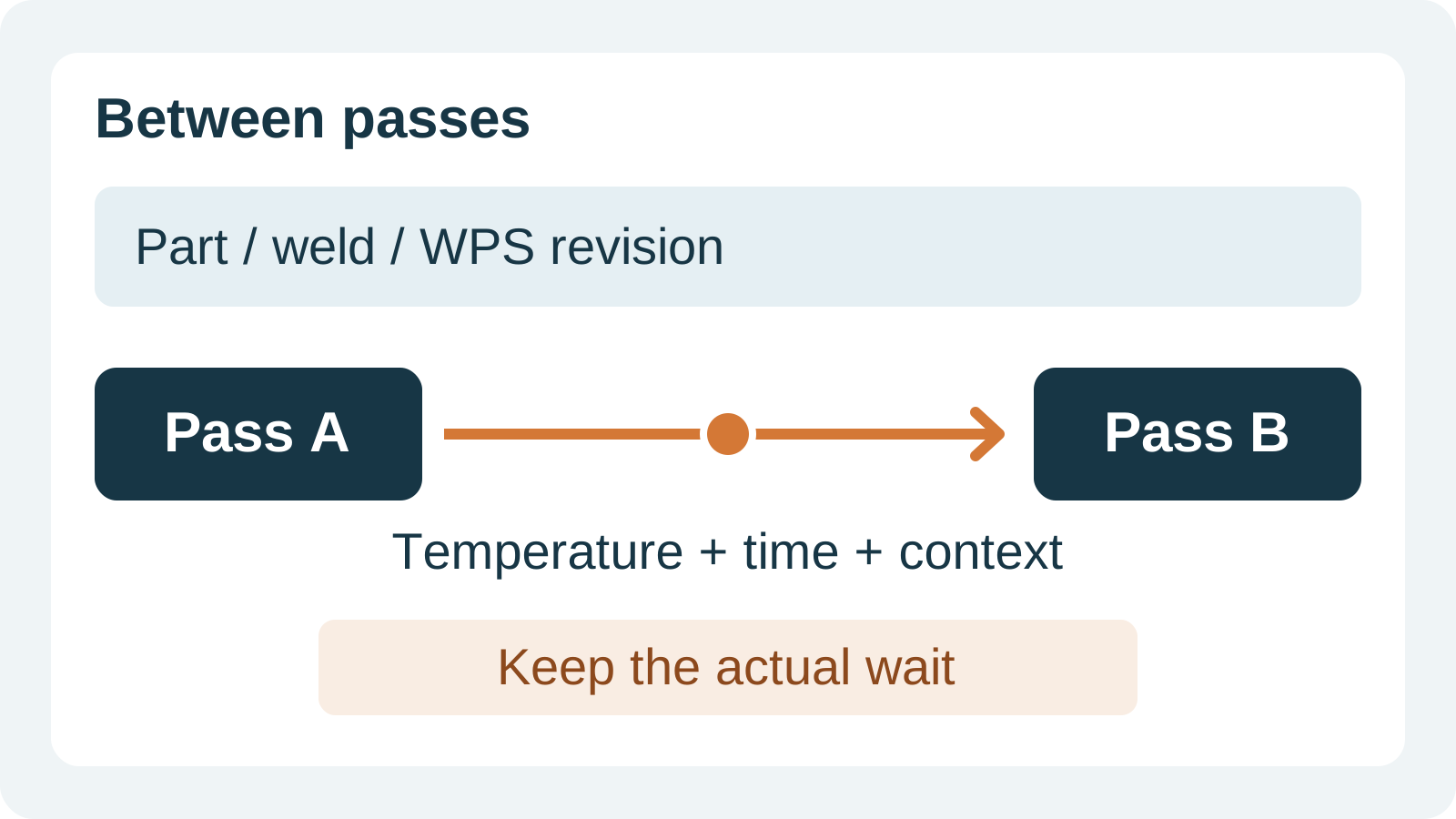
Original concept diagram: a temperature observation belongs to a particular interval between weld passes. The English labels are explained here; no temperature limit, measuring method or customer result is shown.
Include between-pass conditions in the trial scope
If your part needs several weld passes, ask how interpass temperature requirements will be handled and documented before agreeing to a robot trial. Keep any resulting waits in the observed timing. This CBOXTEC guide helps buyers request evidence; the applicable welding procedure and responsible qualified personnel determine the requirements for the actual joint.
What does interpass temperature tell the buyer?
TWI distinguishes preheat before welding from interpass temperature when subsequent runs are deposited. Its explanation covers both maximum and minimum interpass requirements, depending on the procedure and material. Ask which requirements apply to your joint rather than using a generic temperature in the quote. TWI, Which is important - preheat or interpass?; publication/revision date not stated; accessed 2026-10-16.
A welding procedure specification (WPS) describes the welding variables; supporting qualification records are separate evidence. That distinction is explained in TWI, Welding procedure, Job Knowledge 39; publication/revision date not stated; accessed 2026-10-16. A temperature log from a demonstration does not itself qualify a procedure.
Make a pass-to-pass entry traceable
Ask to see how one recorded interval connects to the trial part. These are suggested purchasing-record fields, not a measurement procedure or acceptance standard:
- Procedure reference: the applicable WPS and revision, with the relevant temperature requirements identified by the responsible personnel.
- Observation context: part, weld and pass identification, recorded temperature, time, measurement location and method, and the measuring equipment used.
- Elapsed interval: the end of the previous pass, start of the next pass, actual waiting time and recorded reason for any pause.
- Review outcome: who checked the record, any unresolved condition, and the reference to the agreed weld inspection result.
The location, method and timing of measurements need to follow the applicable requirements. A reading without that context cannot show whether those requirements were met. This article gives no heating, cooling or restart instructions.
Use the recorded waits when comparing quotations
Ask whether temperature checks and any required waits are inside the quoted timing boundary. Do not remove an observed pause just because the arc was off, or assume another task can always occupy it. Compare the actual sequence under the agreed conditions; see the separate guide to cycle-time comparisons. No fixed waiting allowance or production rate is promised here.
Questions about a multilayer trial
Can the first preheat reading replace all later records?
It does not document the conditions between subsequent passes. Agree which observations and records the actual procedure requires, including how interruptions are handled.
Does a robot quotation include automatic temperature measurement?
Only the written supply scope can establish that. Ask for the named equipment, measuring function, compatibility and record output; this article makes no CBOXTEC sensing or control claim.
Does a temperature within the stated range prove weld acceptance?
No. Temperature evidence answers one procedure-control question. The agreed inspection, acceptance criteria and any required procedure qualification still need their own evidence.
Discuss a multilayer welding trial with CBOXTEC using the part drawing, material identification, applicable WPS reference and proposed pass-to-pass record. Missing requirements remain open questions for technical review.